
A Practical Guide for Confident, Everyday Use
What Makes Essential Oils So Potent?
Essential oils aren’t just fragrant—they’re chemically complex.
Each oil contains dozens (sometimes hundreds) of naturally occurring compounds like:
- Monoterpenes (fresh, uplifting, fast-acting)
- Alcohols (generally gentle and skin-friendly)
- Phenols and aldehydes (more reactive and potentially irritating)
Because of this concentration and complexity, essential oils interact quickly with the body—through both the skin and the olfactory system.
That’s why safety isn’t about fear—it’s about respecting their potency.
Dilution: The Foundation of Safe Use
Dilution isn’t just about “stretching” your oils—it’s about how your body processes them.
When essential oils are applied neat (undiluted):
- They absorb rapidly into the bloodstream
- They can overwhelm the skin’s natural barrier
- They increase the risk of sensitization (a delayed allergic-type reaction over time)
Carrier oils slow this process down. They:
- Reduce the concentration of reactive compounds
- Support more even absorption
- Help protect the skin’s lipid barrier
This is especially important for oils high in more reactive constituents.
“Hot Oils” & Skin Sensitivity
Some essential oils feel warm—or even irritating—on the skin. This isn’t random.
It comes down to their chemistry.
Key compounds to understand:
- Phenols (e.g., eugenol in clove, carvacrol in oregano)
- Aldehydes (e.g., cinnamaldehyde in cinnamon, citral in lemongrass)
These compounds are:
- Highly antimicrobial
- Very active biologically
- More likely to irritate skin and mucous membranes
That’s why oils like oregano, clove, cinnamon bark, and thyme (thymol) require much lower dilution.
Even oils like lemongrass (high in citral) can feel surprisingly strong despite smelling fresh and citrusy.
Practical takeaway:
It’s not the oil itself that’s “harsh”—it’s the chemical profile.
Used correctly, these oils can be incredibly beneficial. They just require:
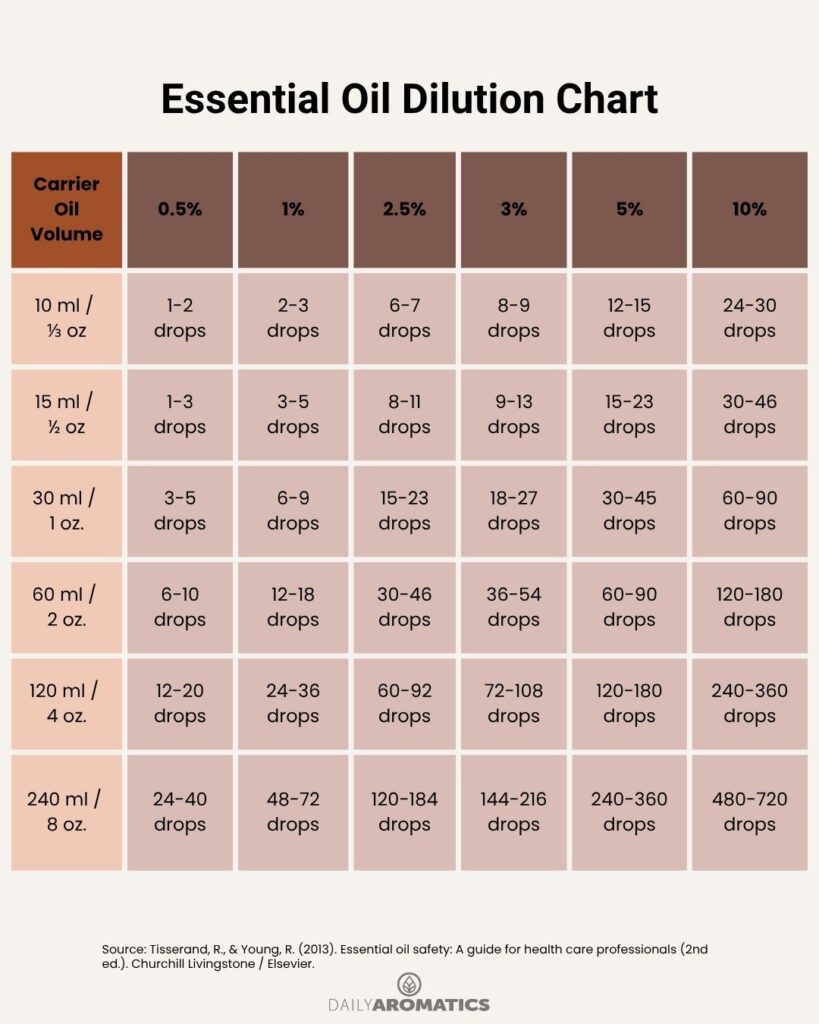
- Lower dilution (often 0.5–1%)
- More mindful application
- Occasional, not daily, use
Phototoxicity: Why Some Oils Don’t Mix with Sunlight
This is one of the most important (and misunderstood) safety topics.
Certain essential oils—especially cold-pressed citrus oils—contain compounds called:
Furanocoumarins
These compounds can:
- Absorb UVA light
- Become activated on the skin
- Trigger a reaction that damages skin cells
This can lead to:
- Redness or burns
- Blistering
- Long-lasting hyperpigmentation
Oils most commonly involved:
- Bergamot
- Lemon
- Lime
- Grapefruit
Key nuance:
- This risk applies to topical use only
- It is most significant with cold-pressed oils
- Steam-distilled citrus oils typically have little to no phototoxic risk
Simple guideline:
Avoid direct sunlight or UV exposure on areas where these oils were applied for 12–24 hours.
Inhalation & Diffusing Safety
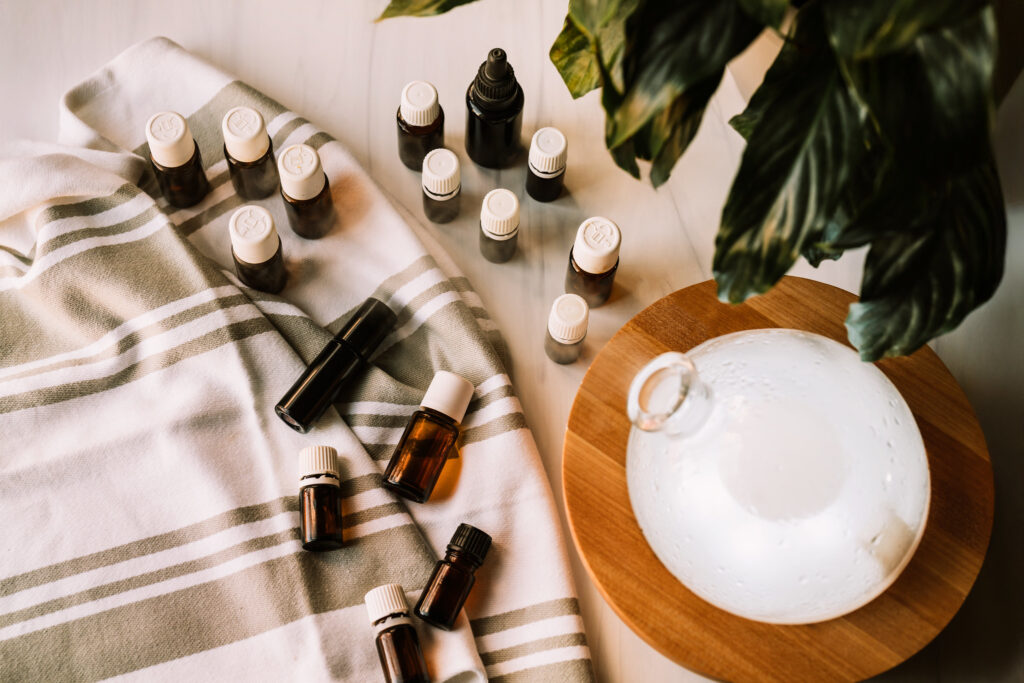
When you diffuse essential oils, you’re inhaling microscopic aromatic compounds that interact directly with the brain through the olfactory system.
This is what makes aromatherapy so effective—but also why moderation matters.
Overexposure can lead to:
- Headaches
- Nausea
- Dizziness
- Sensory overwhelm
This is especially true for:
- Children
- Sensitive individuals
- Those new to essential oils
Why intermittent diffusing works:
Your body responds quickly to aromatic input. Continuous exposure doesn’t necessarily increase benefit—it can actually reduce sensitivity over time.
Babies & Children
Children are not just “small adults.” Their bodies process essential oils very differently, which is why extra care is needed.
Their skin is thinner and more permeable, their respiratory systems are still developing, and their detoxification pathways are not as mature. Because of this, certain essential oil compounds can feel much stronger—or even overwhelming—to a child’s system.
One of the most important things to understand here is the role of specific chemical constituents.
Compounds like 1,8-cineole (found in eucalyptus and some rosemary oils) and menthol (found in peppermint) can have a strong effect on the respiratory system. In young children, especially under the age of 6, these compounds may slow breathing or create a sensation that is too intense for their airways.
Because of this, many experts recommend avoiding these oils for young children—particularly around the face and chest—until at least age 6.
Instead, focus on gentler oils that are well tolerated.
Safer choices for young children (properly diluted):
- Lavender
- Roman chamomile
- Frankincense
- Sweet orange
Practical safety tips:
- Keep dilution low (0.25–1%)
- Avoid applying near the nose, mouth, or chest
- Start with small amounts and observe closely
- Use inhalation or diffusion before topical use when possible
Pregnancy
Pregnancy is a time to be both empowered and cautious.
Essential oils can cross into the bloodstream and, in some cases, may cross the placental barrier. While this doesn’t mean they are unsafe, it does mean that intentional, conservative use is important.
Some essential oils are best avoided during pregnancy due to their potential to stimulate uterine activity or because of their chemical composition.
Oils commonly recommended to avoid (especially in early pregnancy):
- Clary sage
- Cinnamon bark
- Cassia
- Oregano
- Thyme (thymol chemotype)
- Rosemary (high camphor types)
At the same time, many oils are considered gentle and supportive when used properly.
Generally considered safer options (in low dilution):
- Lavender
- Frankincense
- Lemon (watch phototoxicity if topical)
- Ginger (especially for nausea support)
The key here is simplicity.
Best practices during pregnancy:
- Use low dilutions (around 1% or less)
- Avoid daily, long-term use of strong oils
- Stick to a small number of well-tolerated oils
- Prioritize aromatic use (diffusing or inhalation)
Elderly
As we age, our bodies change in ways that affect how we respond to essential oils.
Skin becomes thinner and more permeable, meaning essential oils are absorbed more quickly. At the same time, liver and kidney function—which help process and eliminate compounds—may be less efficient than in younger years.
This doesn’t mean essential oils shouldn’t be used. In fact, they can be incredibly supportive. It simply means that a gentler approach is often best.
Helpful adjustments for older adults:
- Use lower dilutions (around 1% or less)
- Apply to smaller areas of the body
- Avoid frequent reapplication throughout the day
- Be mindful of medications or existing health conditions
- Choose gentler oils over more stimulating or “hot” ones
A slower, simpler approach tends to be both safer and more effective.
Pets & Essential Oils
Animals process essential oils very differently than humans.
For example:
- Cats lack certain liver enzymes needed to metabolize compounds found in essential oils
- Dogs have a much stronger sense of smell and can be easily overwhelmed
This means oils that feel mild to us can be intense—or even harmful—for them.
Especially important:
- Avoid applying oils directly to pets without proper knowledge
- Be cautious with diffusing in enclosed spaces
- Watch for behavioural changes (leaving the room, agitation, lethargy)
Sensitive Individuals
Some people are more reactive due to:
- Chemical sensitivities
- Allergies
- Previous overexposure
Sensitization is especially important to understand here.
What is sensitization?
It’s not an immediate reaction—it develops over time when the immune system becomes reactive to a substance.
Once it happens, even small amounts can trigger irritation.
This is why:
- Dilution matters
- Rotating oils can be helpful
- More is not better
Internal Use
Essential oils are highly concentrated chemical substances.
When taken internally:
- They are absorbed rapidly
- They interact directly with internal organs
- Improper use can increase risk of irritation or toxicity
This route requires a much deeper understanding of:
- Dosage
- Oil chemistry
- Individual health considerations
For most people, aromatic and topical use provide more than enough benefit.
Storage, Shelf Life & Oxidation
There’s a common belief—especially in some essential oil communities—that essential oils “never go bad.”
This isn’t true.
Essential oils are made up of natural chemical compounds, and over time, those compounds begin to change—especially when exposed to oxygen, heat, and light. This process is called oxidation.
Oxidation doesn’t just affect how an oil smells—it changes how it behaves on the skin.
Oxidized oils are significantly more likely to:
- Cause skin irritation
- Contribute to sensitization
- Lose their therapeutic qualities
This is especially important for oils that are high in monoterpenes, which are more chemically reactive and prone to breaking down over time.
Even when stored properly, these oils have a shorter shelf life.
Common monoterpene-rich oils (shorter shelf life):
- Lemon
- Lime
- Sweet orange
- Grapefruit
- Bergamot
- Tangerine
- Pine
- Spruce
- Fir
- Tea tree
General shelf life guidelines:
- Citrus oils: ~1–2 years
- Conifer oils (pine, spruce, fir): ~2–3 years
- Tea tree: ~2–3 years
Other oils (especially those rich in alcohols or sesquiterpenes) may last significantly longer—but no essential oil lasts forever.
Practical storage tips:
- Keep bottles tightly closed (oxygen exposure speeds oxidation)
- Store in a cool, dark place
- Avoid heat and direct sunlight
- Consider replacing frequently used citrus oils more often
A helpful mindset shift:
Fresh oils are not just more fragrant—they are safer for your skin.
Full Disclaimer
This content is for educational purposes only and is not intended as medical advice. I am not a licensed medical professional, and the information shared here is not meant to diagnose, treat, cure, or prevent any disease.
Essential oils are powerful natural substances and should be used with care and respect. Every individual is different, and what works well for one person may not be appropriate for another.
If you are pregnant or breastfeeding, have a medical condition, are taking medications, or are caring for young children, elderly individuals, or pets, please consult with a qualified healthcare provider before using essential oils.
By using essential oils, you accept full responsibility for your own health and well-being.
