Welcome
  • Home
  • Blog
  • Shop
  • About
  • 0
Category:

Uncategorized

Uncategorized

Natural Home: Creating a Cleaner, Calmer Home with Simple Plant-Based Alternatives

by woodsamy May 17, 2026

Creating a healthier home was one of the first steps I took on my natural living journey.

Long before I understood much about herbs or essential oils, I began learning about the ingredients hidden in many conventional household products. Synthetic fragrances, harsh detergents, and other chemicals are common in everything from laundry soap to all-purpose cleaners and air fresheners.

As I learned more, I became increasingly aware that the products we use in our homes can affect far more than just how clean our counters look.

They may also influence:

  • Indoor air quality
  • Skin health
  • Respiratory health
  • Hormonal balance
  • Overall toxic load

That realization prompted me to make changes.

Not all at once, and certainly not perfectly.

But one step at a time.


Progress Over Perfection

I want to be very honest about something.

I do not make every cleaning product from scratch.

While I enjoy simple DIY recipes and use them often, I also purchase products that I feel good about using in our home.

Over the years, I have learned that natural living is not about doing everything perfectly.

It is about making thoughtful choices, doing what is realistic for your season of life, and reducing unnecessary exposures where you can.

Sometimes that means mixing your own all-purpose cleaner with vinegar and essential oils.

Other times it means buying a trusted product that aligns with your values and simplifies your routine.

Both approaches are valid.


Why Household Products Matter

We use cleaning products every day.

They are sprayed into the air, applied to surfaces, washed into our clothing, and used on items our families touch constantly.

Because of this, household products can be one of the simplest and most impactful places to begin reducing toxic load.

Even small changes can make a meaningful difference over time.


What Is a Natural Home?

To me, a natural home is not about perfection.

It is about creating an environment that feels:

  • Cleaner
  • Calmer
  • Simpler
  • More intentional
  • More supportive of overall health

This often includes:

  • Choosing products with simpler ingredient lists
  • Reducing synthetic fragrances
  • Making a few easy DIY products
  • Opening windows regularly
  • Using plants and essential oils thoughtfully

Simple Ways to Get Started

You do not need to replace everything overnight.

Some of the easiest places to begin include:

  • All-purpose cleaners
  • Laundry products
  • Dish soap
  • Hand soap
  • Air fresheners
  • Candles and scented products

Start with one product you use frequently and look for a cleaner alternative.

Small changes add up.


Easy DIY Ideas

If you enjoy making your own products, some great beginner recipes include:

  • All-purpose cleaning spray
  • Linen spray
  • Laundry scent boosters
  • Hand scrubs
  • Natural room sprays

These recipes are often simple, affordable, and highly effective.


Tools I Use to Check Ingredients

When purchasing products, I often look up ingredients using resources such as:

  • EWG Skin Deep
  • Think Dirty

These tools are not perfect, but they can help me make more informed decisions.

It is also important to check in with the products and brands you use from time to time. Formulations can change, and a product that once had a simple, clean ingredient list may be reformulated over the years.

For me, this is less about striving for perfection and more about staying aware and making thoughtful choices as new information becomes available.


Final Thoughts

Creating a healthier home does not require perfection.

It is not about making every product yourself or eliminating every questionable ingredient overnight.

It is about making thoughtful changes, one step at a time.

Over the years, I have learned that the most sustainable approach is one rooted in balance.

DIY what you can.

Purchase trusted products when it makes life easier.

And focus on progress rather than perfection.

A cleaner, calmer, more intentional home is built through small choices made consistently over time.
0 comments
0 FacebookTwitterPinterestEmail
Uncategorized

Seasonal Support: Working with Nature Throughout the Year

by woodsamy May 17, 2026

One of the most powerful shifts in my natural living journey has been learning to pay attention to the seasons.

Nature is never static.

Spring brings growth and renewal.
Summer invites expansion and activity.
Autumn encourages slowing down and gathering in.
Winter calls for rest and restoration.

As the world around us changes, our bodies often change too.

Energy levels shift.
Digestion can feel different.
Skin responds to temperature and humidity.
Mood and motivation fluctuate.

Rather than expecting our bodies to feel exactly the same all year long, we can learn to support them in ways that align with each season.

This is where herbs, nourishing foods, and essential oils can be incredibly helpful.


Why Seasonal Support Matters

Modern life often asks us to maintain the same pace year-round.

But nature operates in cycles.

When we begin paying attention to these rhythms, we can make simple adjustments that help us feel more grounded and resilient.

These adjustments do not need to be complicated.

Sometimes seasonal support looks like:

  • Drinking mineral-rich herbal teas in spring
  • Using citrus oils to refresh your home
  • Spending more time outdoors in summer
  • Nourishing dry skin in winter
  • Choosing warming herbs as the weather cools

Small shifts can have a meaningful impact over time.


Seasonal Themes

Spring: Renewal and Gentle Detoxification

Spring is a time of movement and new growth.

This season often inspires us to:

  • Open the windows
  • Refresh our routines
  • Support digestion and elimination
  • Increase energy and motivation

Favourite supports:

  • Nettles
  • Dandelion
  • Cleavers
  • Lemon
  • Grapefruit
  • Rosemary

Summer: Energy and Expansion

Summer is a season of abundance and activity.

Support may focus on:

  • Hydration
  • Cooling herbs
  • Skin care
  • Outdoor living

Favourite supports:

  • Peppermint
  • Lavender
  • Calendula
  • Lemon balm
  • Sweet Orange

Autumn: Grounding and Preparation

Autumn encourages us to slow down and prepare for colder months.

Support may focus on:

  • Immune resilience
  • Nourishment
  • Emotional grounding

Favourite supports:

  • Ginger
  • Cinnamon
  • Cedarwood
  • Frankincense
  • Elderberry

Winter: Rest and Restoration

Winter invites us inward.

Support may focus on:

  • Sleep
  • Dry skin care
  • Respiratory comfort
  • Nervous system support

Favourite supports:

  • Lavender
  • Roman Chamomile
  • Black Spruce
  • Honey
  • Oats

Simple Ways to Support Your Body Seasonally

Seasonal living does not require dramatic changes.

Start with small practices such as:

  • Drinking herbal teas
  • Diffusing essential oils
  • Eating seasonal foods
  • Spending time outdoors
  • Adjusting skin care routines
  • Prioritizing rest when needed

Final Thoughts

The seasons offer constant reminders that change is natural.

By adjusting our routines and leaning into the support that plants provide, we can feel more connected to nature and better supported throughout the year.

Simple seasonal shifts, practiced consistently, can make a profound difference.

0 comments
0 FacebookTwitterPinterestEmail
Uncategorized

My Favourite Essential Oils for Beginners

by woodsamy May 17, 2026

When people first begin using essential oils, one of the most common questions I hear is:

“Which essential oils should I start with?”

With hundreds of essential oils available, it can feel overwhelming to know where to begin.

The good news is that you do not need a huge collection to get started.

A small group of versatile oils can support many aspects of daily life—from relaxation and sleep to digestion, skin care, seasonal wellness, and natural cleaning.

These are the ten essential oils I recommend most often to beginners. They are the same oils I cover in my free guide, The Essential Ten: Confidently Using 10 Essential Oils for Everyday Support.


Lemon

Bright, fresh, and uplifting, lemon is one of my favourite oils for:

  • Supporting a positive mood
  • Enhancing focus and mental clarity
  • Natural cleaning
  • Freshening the home

Lavender

Lavender is one of the most versatile essential oils available.

It is commonly used to support:

  • Relaxation and sleep
  • Skin health
  • Minor irritations
  • Emotional balance

Peppermint

Peppermint is cooling, refreshing, and invigorating.

It is often used for:

  • Digestive support
  • Mental clarity and focus
  • Muscle tension
  • Cooling comfort

Frankincense

Frankincense is grounding and deeply versatile.

I frequently use it for:

  • Skin care
  • Emotional support
  • Meditation and prayer
  • Daily wellness routines

Tea Tree

Tea Tree is a staple in both skin care and natural cleaning.

It is commonly used for:

  • Blemish-prone skin
  • Scalp care
  • Household cleaning
  • Freshening the air

Eucalyptus

Eucalyptus is a favourite for respiratory support and shower aromatherapy.

It is often used for:

  • Clear breathing
  • Steam inhalations
  • Seasonal wellness
  • Natural cleaning blends

Sweet Orange

Sweet Orange has a cheerful and comforting aroma.

It is wonderful for:

  • Uplifting mood
  • Supporting relaxation
  • Freshening rooms
  • DIY cleaning products

Ginger

Ginger is warming and supportive for:

  • Digestion
  • Nausea
  • Circulation
  • Muscle comfort

Cedarwood

Cedarwood has a grounding, woodsy aroma and is often used for:

  • Sleep
  • Emotional balance
  • Scalp care
  • Diffuser blends

Roman Chamomile

Roman Chamomile is one of my favourite oils for calming the nervous system.

It is especially helpful for:

  • Relaxation
  • Sleep
  • Emotional support
  • Sensitive skin

If You Only Start With Five Oils

If buying ten oils feels overwhelming, start with these five versatile oils:

  • Lavender
  • Lemon
  • Peppermint
  • Tea Tree
  • Frankincense

These five alone can support relaxation, mood, skin care, digestion, and natural cleaning.


Safety First

Essential oils are highly concentrated and should always be used thoughtfully.

If you are new to essential oils, these resources will help you build a strong foundation:

  • New to Essential Oils? Start Here
  • Essential Oil Dilution Chart
  • Essential Oil Safety Basics

Download My Free Beginner’s Guide

If you would like a practical, step-by-step introduction to essential oils, download my free guide:

The Essential Ten: Confidently Using 10 Essential Oils for Everyday Support

Inside, you will learn:

  • What essential oils are
  • How to use them safely
  • Dilution guidelines
  • The ten oils I recommend most often
  • Simple recipes for everyday life

[Download the Free Guide COMING SOON]


Final Thoughts

You do not need dozens of essential oils to begin benefiting from aromatherapy.

A handful of versatile oils, combined with a solid understanding of safety, can support many areas of everyday life.

Start simple, use them consistently, and let your confidence grow over time.

0 comments
0 FacebookTwitterPinterestEmail
Uncategorized

New to Essential Oils? Start Here

by woodsamy May 17, 2026

New to Essential Oils

Welcome to the World of Essential Oils

When I first discovered essential oils, I was both intrigued and overwhelmed.

There seemed to be endless information about which oils to use, how to apply them, and what was safe.

Over time, I learned that essential oils do not need to be complicated.

At their core, essential oils are highly concentrated aromatic compounds extracted from plants. They capture the unique chemistry of flowers, leaves, bark, roots, and resins and can be used to support many aspects of daily life.

From creating a calming evening routine to freshening your home naturally, essential oils offer a simple way to bring the power of plants into your everyday life.

The key is to start slowly, use them safely, and focus on practical applications that fit naturally into your routine.


What Are Essential Oils?

Essential oils are concentrated extracts obtained from aromatic plants.

These extracts contain naturally occurring compounds that give plants their characteristic scent and many of their beneficial properties.

Each oil has its own unique chemistry and personality.

For example:

  • Lavender is often used for relaxation and skin support.
  • Lemon is uplifting and commonly used in cleaning.
  • Peppermint is refreshing and supportive for digestion and focus.
  • Tea Tree is widely used for skin and household applications.
  • Frankincense is valued for skin, emotional grounding, and meditation.

The Best Way to Begin

If you are new to essential oils, my best advice is this:

Keep it simple.

You do not need dozens of oils or complicated routines.

Start by learning:

  • What essential oils are
  • How to dilute them properly
  • Basic safety principles
  • A few practical ways to use them

Diffusing and topical use (properly diluted in a carrier oil) are excellent starting points for beginners.


Essential Oils Are Supportive, Not Magical

Essential oils can be wonderful tools, but they work best as part of a healthy lifestyle.

Sleep, nutrition, movement, stress management, and time in nature all play foundational roles in overall well-being.

I view essential oils as one of many ways to support the body naturally.


Start Here

If you are just getting started, these resources will help you build a strong foundation.

Essential Oil Dilution Chart

Learn how to safely dilute essential oils for everyday use.

Essential Oil Safety Basics

Important guidelines for using essential oils confidently.

Essential Oils 101: Beginner’s Guide (Free PDF)

A simple and practical guide to using essential oils safely and effectively.

My Favourite Essential Oils for Beginners

A helpful overview of versatile oils to start with.


Download the Free Beginner’s Guide

If you would like a step-by-step introduction, download my free guide:

The Essential Ten: Confidently Using 10 Essential Oils for Everyday Support

Inside, you will learn:

  • What essential oils are
  • Safe ways to use them
  • Dilution guidelines
  • Ten versatile oils for everyday life
  • Simple recipes to get started
[CLICK HERE LINK COMING SOON]

Final Thoughts

You do not need to know everything to begin.

Choose one or two oils, learn how to use them safely, and build your confidence over time.

Essential oils are one of the simplest ways to bring the wisdom of plants into your home and daily routines.

And like most things in natural living, the most effective approach is often the simplest.

0 comments
0 FacebookTwitterPinterestEmail
Uncategorized

Botanical Skin Care: A Simple Introduction to Caring for Your Skin with Plants

by woodsamy April 14, 2026

Growing up, I was never the girl who wore makeup.

Part of that was simply my personality. I was more comfortable outdoors than in front of a mirror, and I was much more of a tomboy than a fashion enthusiast.

But even at a young age, I noticed something that stayed with me.

Many of the girls around me seemed to rely heavily on makeup to cover blemishes and acne. Whether the products they were using were actually contributing to their skin concerns or not, I remember wondering if putting more synthetic ingredients on the skin was really helping.

That observation planted a seed.

I decided early on that I wanted to be thoughtful about what I put on my skin.

More than thirty years later, I still do not wear makeup, and I remain deeply aware of the ingredients in the products my family uses every day.

What I have discovered over the years is that nature offers an incredible array of ingredients that can gently support healthy skin.

Herbs, flowers, clays, plant oils, and essential oils have been used for generations to cleanse, soothe, and nourish the skin.

Botanical skin care is not about chasing perfection.

It is about working with nature to care for the skin you are in.


What Is Botanical Skin Care?

Botanical skin care refers to using ingredients derived from plants to support healthy skin.

These ingredients may include:

  • Herbal infused oils
  • Plant butters
  • Carrier oils
  • Floral waters (hydrosols)
  • Clays
  • Oats
  • Honey
  • Essential oils
  • Dried herbs and flowers

Rather than relying solely on synthetic ingredients, botanical skin care uses the natural properties of plants to cleanse, moisturize, soothe, and protect the skin.


Why What You Put on Your Skin Matters

Your skin is your body’s largest organ.

It serves as a protective barrier, but it also comes into daily contact with the products we apply to it.

This does not mean every ingredient is harmful, nor does it mean you need to throw everything away overnight.

But becoming more aware of what you use can help you make informed choices and reduce unnecessary exposure to synthetic fragrances, preservatives, and other ingredients that may irritate sensitive skin.

Botanical skin care offers a simpler and more intentional approach.


Benefits of Botanical Skin Care

Plants contain naturally occurring compounds that can support the skin in many ways.

Depending on the ingredient, botanicals may help to:

  • Soothe irritation
  • Support the skin barrier
  • Lock in moisture
  • Calm redness
  • Gently cleanse
  • Provide antioxidants
  • Promote a healthy-looking complexion

Perhaps most importantly, botanical skin care encourages us to slow down and reconnect with the natural world.


Simple Ingredients to Start With

If you are new to botanical skin care, you do not need dozens of ingredients.

A few versatile staples can go a long way.

Calendula

Often called one of the best herbs for skin care, calendula is traditionally used to soothe dry, irritated, or sensitive skin.

Chamomile

Known for its calming properties, chamomile is excellent for delicate or reactive skin.

Oats

Finely ground oats help cleanse gently and soothe itchy or dry skin.

Honey

A natural humectant that helps draw moisture to the skin.

Jojoba Oil

A lightweight oil that closely resembles the skin’s natural sebum.

Kaolin Clay

A mild clay that helps cleanse without over-drying.


Easy Ways to Begin

You do not need a complicated routine.

Start with one or two simple preparations:

  • Herbal infused oils
  • Calendula salves
  • Cleansing grains
  • Honey masks
  • Herbal facial steams

These preparations are easy to make and help you experience the benefits of plants firsthand.


Final Thoughts

One of the most beautiful things about botanical skin care is its simplicity.

You do not need an elaborate routine or a shelf full of expensive products.

Some of the most effective skin care ingredients are flowers, herbs, oils, and clays that have been used for generations.

Start with one plant.

Learn how it feels, smells, and supports your skin.

Over time, you may discover that nature has been offering exactly what you need all along.

0 comments
0 FacebookTwitterPinterestEmail
Uncategorized

Growing Your Own Herbal Garden: The Best Herbs for Beginners

by woodsamy April 14, 2026

If I’m being honest, one of the things that helped me feel more comfortable with herbalism was growing herbs in my own garden. In many cases, I was growing herbs long before I fully understood how to use them.

I would read about plants that might offer gentle support for our family, then plant a few of them in our garden boxes just to see how they grew. Over time, I began to develop a much deeper connection with the herbs themselves.

I watched them grow to produce their first flowers. I noticed how they responded to drought, heavy rain, summer heat, and cool autumn mornings. I rubbed their leaves between my fingers, inhaled their aroma, and harvested small handfuls to use in our kitchen and around our home.

Those observations became some of my greatest teachers.

There is something incredibly grounding about getting to know a plant this way. You begin to recognize its scent, its texture, its growth habits, and its seasonality. Even clipping a few sprigs of thyme for supper or brewing fresh lemon balm tea becomes a simple way to connect with the plants growing around you.

If you have room for even one or two herbs, I highly recommend growing them yourself.

And if you do not have a large garden, that is perfectly fine. Many medicinal herbs thrive in containers, raised beds, and patio planters.

Growing herbs is one of the simplest and most rewarding ways to begin learning herbalism. It allows you to slow down, observe, and build confidence one plant at a time. Let’s dive in!


Why Grow Your Own Herbs?

Growing your own herbs offers several advantages:

  • You know exactly how they were grown.
  • You can harvest them at peak freshness.
  • You develop a deeper connection to the plants you use.
  • Many medicinal herbs are surprisingly easy to grow.
  • It can save money over time.

Even if you only have a small garden or a few containers on your patio, you can grow an impressive herbal apothecary.


The Best Herbs for Beginners to Grow

These herbs are easy to cultivate and incredibly versatile.

Calendula

One of the most useful herbs for skin care.

Uses:

  • Infused oils
  • Salves
  • Balms
  • Bath products
  • Skin-soothing creams

Supports:
Cuts, scrapes, dry skin, and irritated skin.


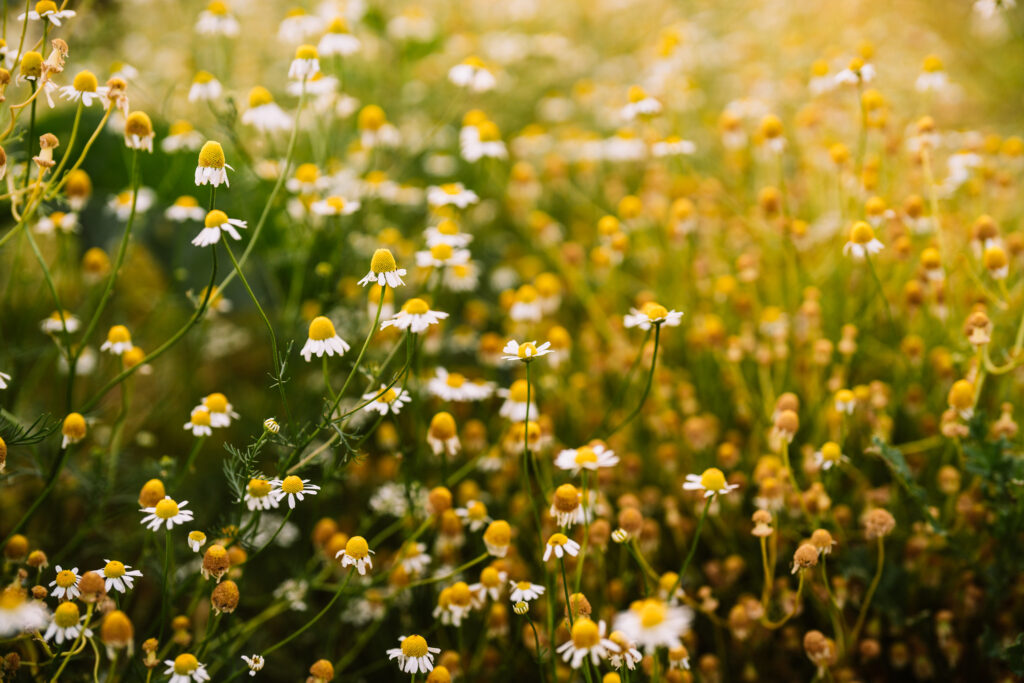
German Chamomile

A gentle herb for both skin and relaxation.

Uses:

  • Teas
  • Infused oils
  • Bath products
  • Facial care

Supports:
Relaxation, digestion, and sensitive skin.


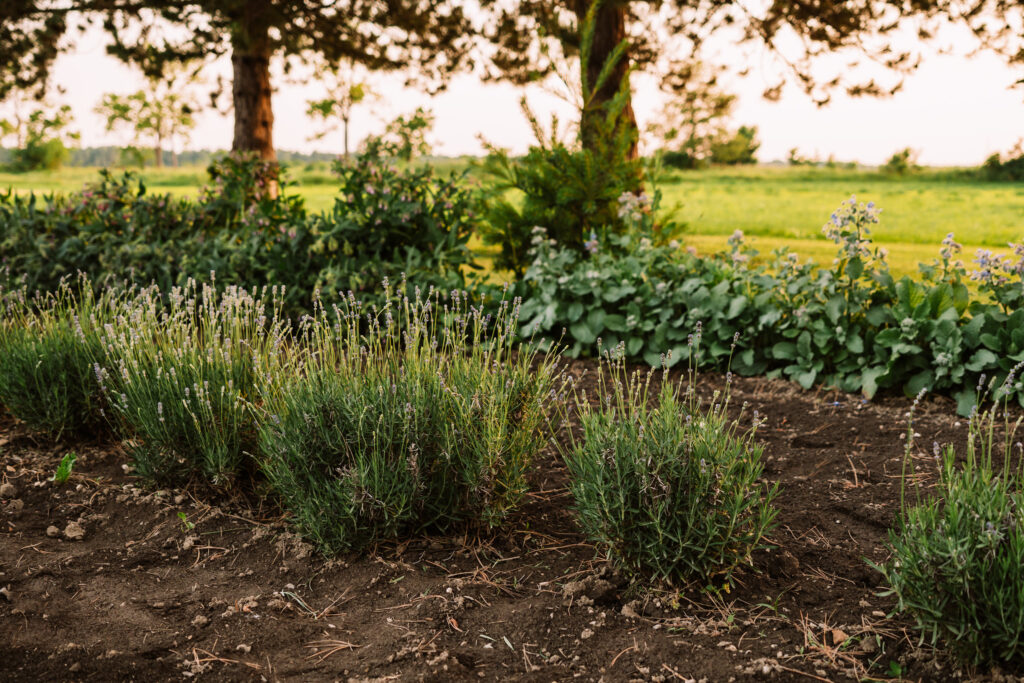
Lavender

A classic herb for calming and skin support.

Uses:

  • Teas
  • Infused oils
  • Bath products
  • Sleep blends

Supports:
Stress, sleep, and skin health.


Lemon Balm

Easy to grow and wonderfully uplifting.

Uses:

  • Teas
  • Tinctures
  • Glycerites
  • Herbal honeys

Supports:
Stress, mood, and digestion.


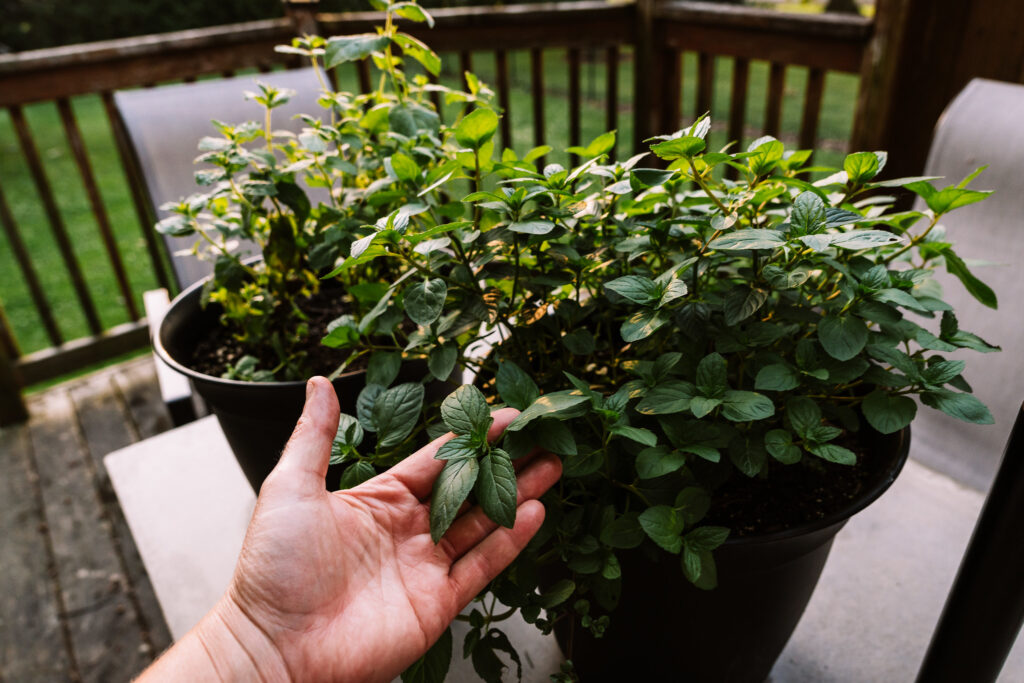
Peppermint

One of the easiest and most versatile herbs to grow.

Uses:

  • Teas
  • Digestive blends
  • Steam inhalations
  • Cooling balms

Supports:
Digestion, headaches, and respiratory comfort.


Catnip

Not just for cats — though my cats love it which makes it a bit trickier for me to grow. If you have cats, you’ll have to find a way to keep them away from your catnip plants. They tend to rub up against them and crush them!

Uses:

  • Teas
  • Tinctures
  • Children’s herbal preparations

Supports:
Relaxation and digestive comfort.


Thyme

A powerful culinary and medicinal herb.

Uses:

  • Teas
  • Steam inhalations
  • Herbal syrups and honeys

Supports:
Respiratory health and immune support.


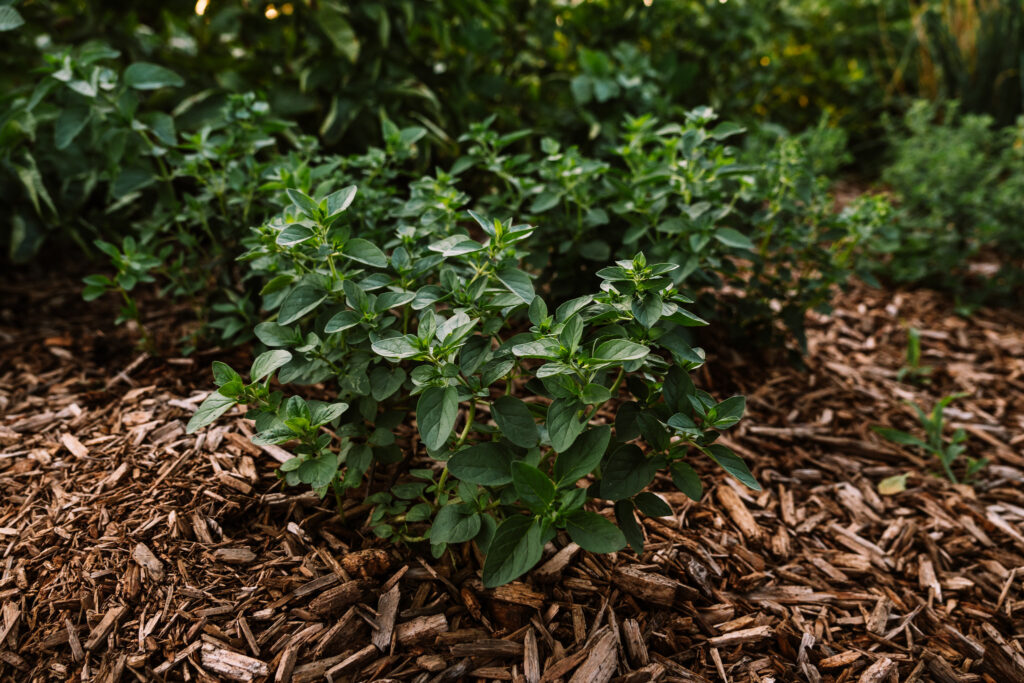
Oregano

A hardy herb with strong aromatic properties.

Uses:

  • Culinary preparations
  • Infusions
  • Steam blends

Supports:
Respiratory and immune support.


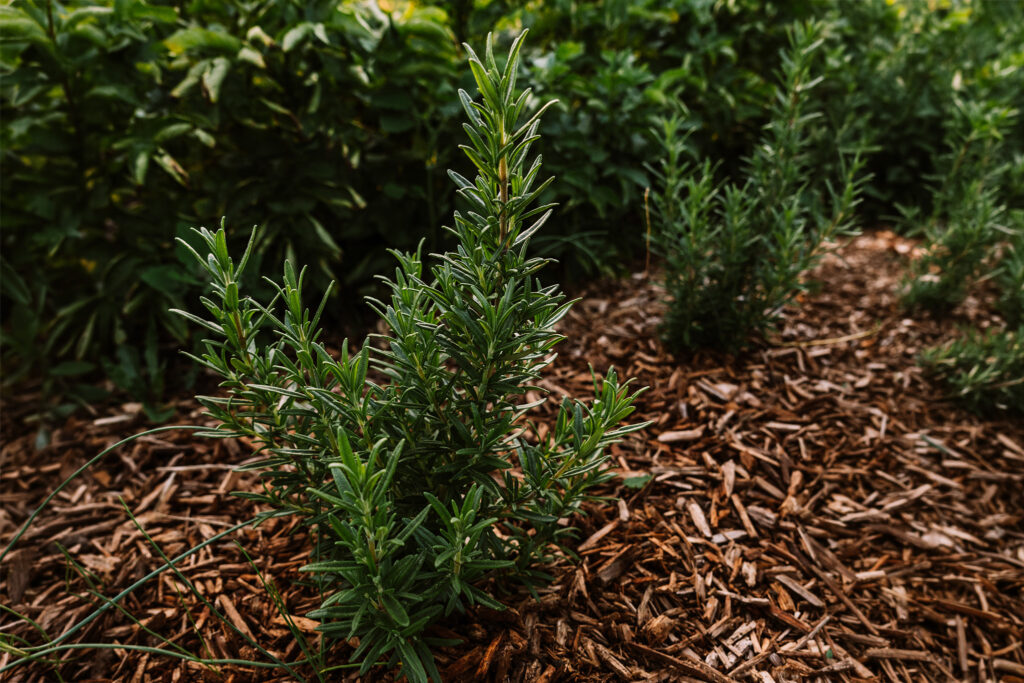
Rosemary

A stimulating herb for both mind and body.

Uses:

  • Hair rinses
  • Infused oils
  • Teas

Supports:
Circulation, focus, and scalp health.


Nettle

A deeply nourishing herb rich in minerals.

Uses:

  • Nutritive teas
  • Hair rinses
  • Mineral infusions

Supports:
Overall nourishment and seasonal wellness.


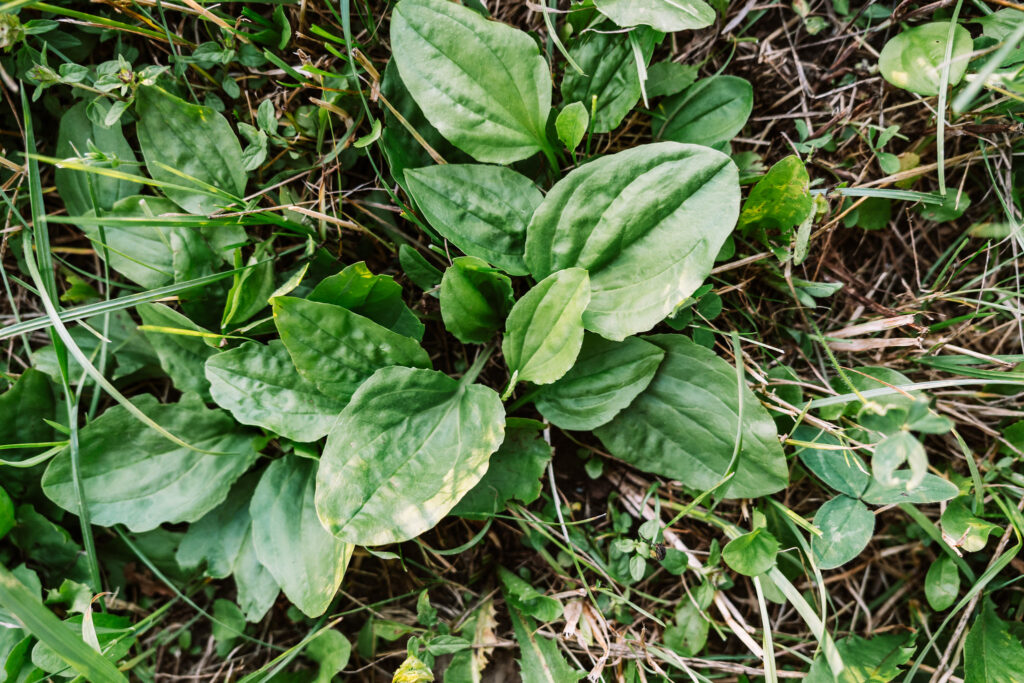
Plantain

Often considered a weed, but one of the most useful skin herbs.

Uses:

  • Infused oils
  • Salves
  • Poultices

Supports:
Bites, stings, and skin irritation.


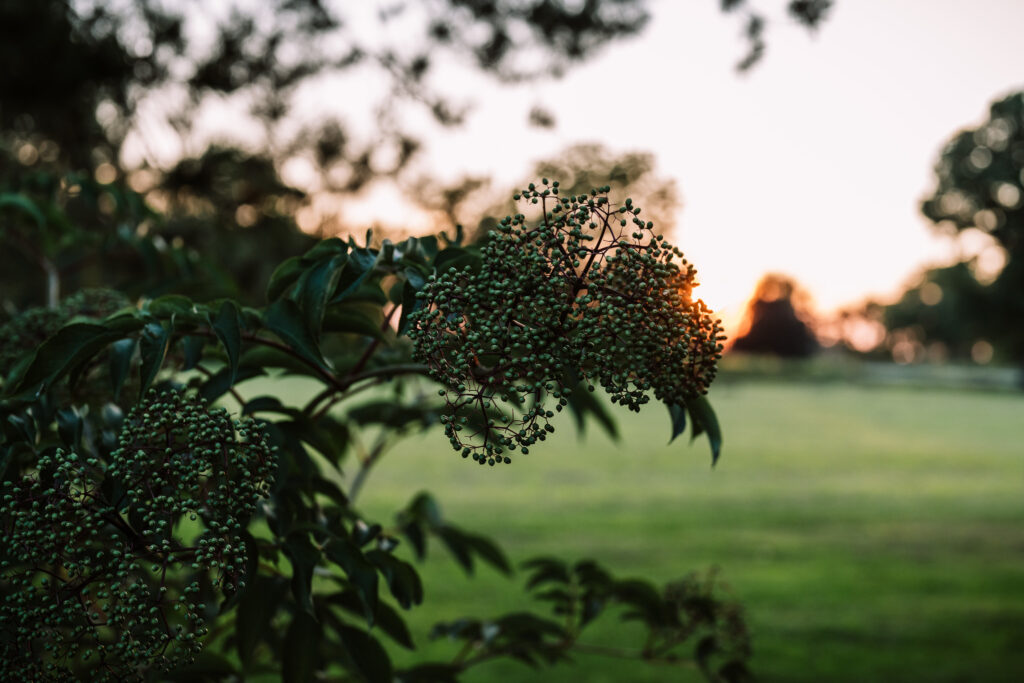
Elder

A valuable shrub that offers both flowers and berries.

Uses:

  • Teas
  • Syrups
  • Glycerites
  • Tinctures

Supports:
Seasonal immune wellness.


My Top 10 Beginner Herbs

If I were starting from scratch, these are the ten herbs I would prioritize:

  1. Calendula
  2. Chamomile
  3. Lavender
  4. Lemon Balm
  5. Peppermint
  6. Nettle
  7. Plantain
  8. Thyme
  9. Rosemary
  10. Elder

With these ten herbs, you can make:

  • Herbal teas
  • Infused oils
  • Salves and balms
  • Tinctures
  • Glycerites
  • Herbal honeys
  • Bath products
  • Natural skin care

The Best Herbs for Different Types of Herbal Preparations

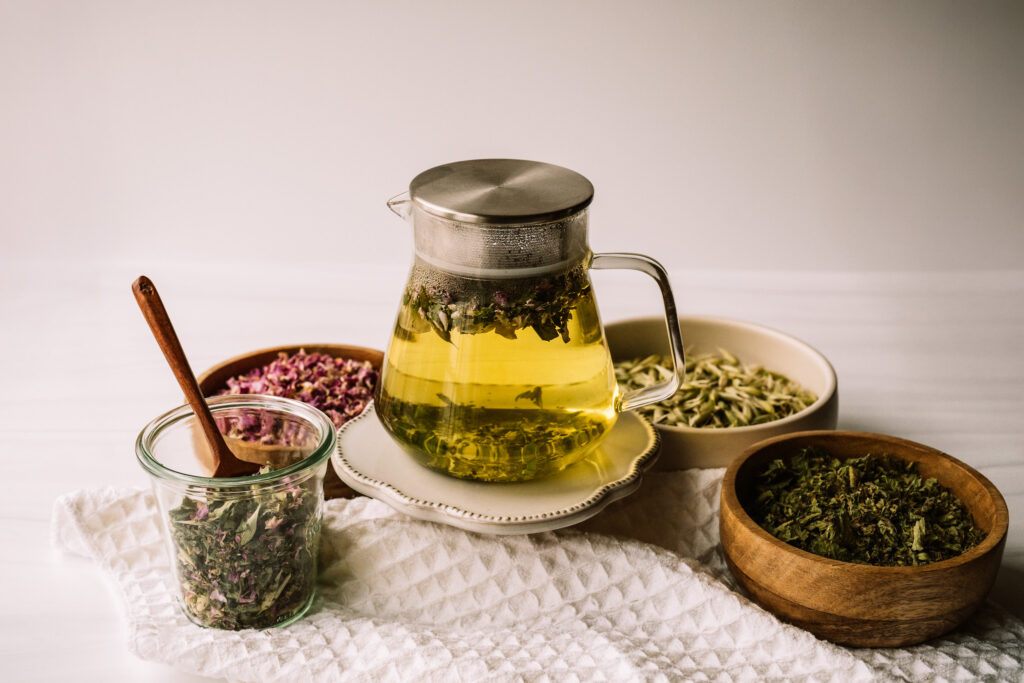
Teas

  • Lemon Balm
  • Chamomile
  • Peppermint
  • Nettle
  • Catnip

Infused Oils and Salves

  • Calendula
  • Plantain
  • Lavender
  • Chamomile

Respiratory Support

  • Thyme
  • Oregano
  • Rosemary

Skin Care

  • Calendula
  • Lavender
  • Chamomile
  • Plantain

Tinctures and Glycerites

  • Lemon Balm
  • Catnip
  • Elderberries

Growing Herbs in Small Spaces

You do not need a large garden to get started.

Many herbs thrive in:

  • Raised beds
  • Patio containers
  • Window boxes
  • Small backyard gardens

Lemon balm, peppermint, thyme, oregano, and calendula all grow beautifully in containers.


Start Simple

One of the biggest misconceptions about herbalism is that you need dozens of herbs and complicated recipes.

You don’t.

Start with one or two plants.

Make a tea.

Infuse an oil.

Create a simple salve.

The most effective herbal routines are often the simplest ones.


Everything We Need Has Always Been Here

There is something profoundly grounding about growing the very plants that can nourish and support your family.

The garden becomes more than a source of food and beauty. It becomes part of your home apothecary.

You do not need to know every herb to begin.

Just start with one plant, learn how to use it, and let your herbal garden grow from there.

0 comments
0 FacebookTwitterPinterestEmail
Uncategorized

Choosing a Carrier Oil

by woodsamy April 14, 2026

Post coming soon

0 comments
0 FacebookTwitterPinterestEmail
Uncategorized

Everyday Herbalism: Bringing Herbs Back Into Daily Life

by woodsamy April 14, 2026

Herbalism doesn’t have to be complicated to be meaningful.

In fact, for most of history, it wasn’t.

It lived in the quiet, everyday moments—
in the herbs added to meals, the teas steeped at the end of the day, and the plants growing just outside the door.

And in many ways, that’s where herbalism is still meant to live.


We Are Part of Nature

We often think of herbalism as something we need to learn about—something separate from us. But at its core, herbalism is rooted in connection.

We are not separate from nature.

Our bodies recognize plants. They respond to them. They’ve adapted alongside them for generations.

For thousands of years, people lived closely with the land—using what grew around them to support digestion, calm the nervous system, ease discomfort, and nourish the body.

It’s only been in more recent history that we’ve become disconnected from these rhythms—looking outside of nature for support, instead of first looking within it.

Everyday herbalism is, in many ways, a return to that connection.


What Is Everyday Herbalism?

Everyday herbalism is about bringing plants back into your daily life in simple, practical ways.

Not as a separate routine you have to learn or perfect—but as something woven into what you’re already doing. It’s not about doing everything. It’s about doing a few things, consistently.

It’s choosing to support your body with herbs in ways that feel natural, approachable, and sustainable.


What This Can Look Like in Real Life

Herbalism doesn’t need to be elaborate to be effective.

Often, it looks like small moments throughout your day:

  • A cup of peppermint or ginger tea after a meal
  • Lemon balm in the evening as you wind down
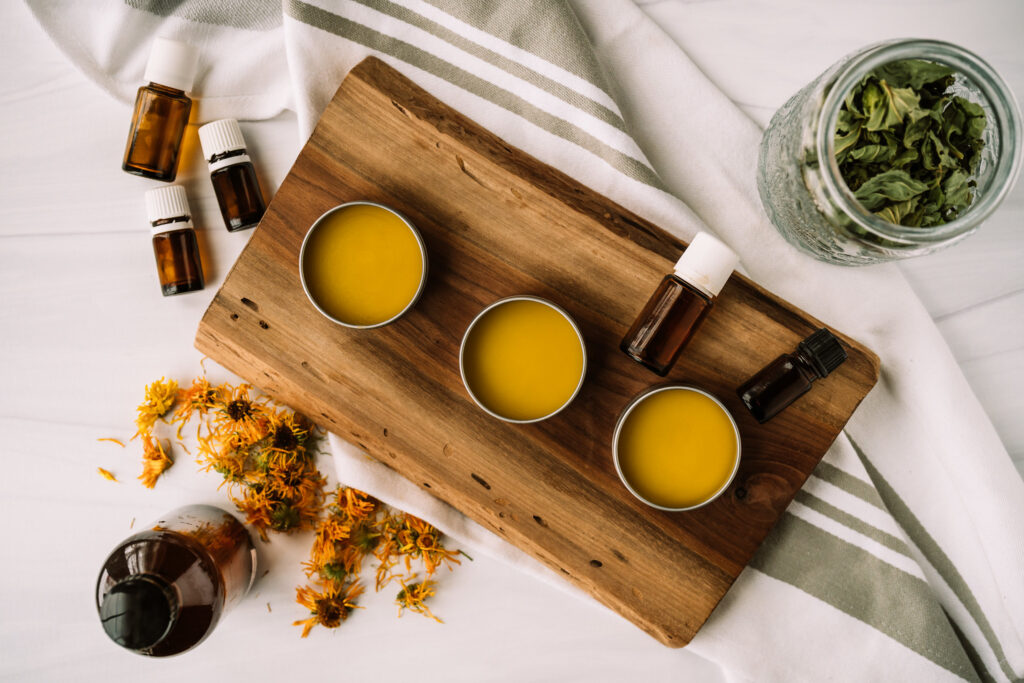
  • Herbs infused into honey, sitting on your counter ready to use
  • Adding fresh herbs like rosemary, thyme, or basil to your cooking with intention
  • Growing a handful of herbs and learning how to use them well

These aren’t complicated practices. They’re simple habits—ones that gently support the body over time.


The Power of Simple, Consistent Use

There can be a tendency to feel like simple isn’t enough. But when it comes to supporting your body, consistency matters more than complexity.

A single cup of tea might feel small. But a daily cup of tea, over weeks and months, becomes something much more supportive. Herbalism doesn’t have to be elaborate to be effective. It just needs to be lived.


Herbalism as a Way of Life

When herbalism becomes part of your everyday life, it stops feeling like something you have to learn…

and starts becoming something you simply do.

It flows alongside:

  • the meals you prepare
  • the routines you keep
  • the seasons you move through

It becomes part of how you care for yourself and your family—naturally, gently, and over time.


A Simple Way to Begin

If you’re new to herbalism, you don’t need to start with everything. Start small. Choose a few herbs that feel approachable—ones you recognize, or maybe already have in your kitchen or garden.

Use them regularly:

  • as teas
  • in your meals
  • infused into honey or oil

Pay attention to how they feel in your body. Let your knowledge grow from experience, not overwhelm.

How to Start Practicing Everyday Herbalism

If this way of living feels appealing, you don’t need to overhaul everything to begin. Start small, and let it build naturally over time. Here’s a simple way to begin:
1. Choose a few familiar herbs
Start with 3–5 herbs you recognize or already have on hand—like peppermint, ginger, chamomile, or rosemary.

2. Use them in simple ways
Focus on methods that easily fit into your day:

  • herbal teas
  • adding herbs to meals
  • simple infusions like honey or oil

3. Be consistent
You don’t need to do everything—just use what you have regularly.
A daily cup of tea or a simple habit is more impactful than occasional, complicated efforts.

4. Pay attention
Notice how your body responds. Herbalism becomes more intuitive the more you use it.


A Return to What We’ve Always Known

Herbalism isn’t out of reach. It’s in the cup of tea you make, the herbs you grow, and the small choices you return to each day. And in many ways, it’s not something new to learn—it’s something old to remember.

0 comments
0 FacebookTwitterPinterestEmail
Uncategorized

Dilution Guide for Essential Oils

by woodsamy April 13, 2026

When you’re getting started with essential oils, dilution can feel like one of the most confusing pieces.

But it doesn’t have to be complicated.

Think of dilution as a way to use essential oils effectively while being gentle on your body. Essential oils are highly concentrated plant extracts, and a little truly goes a long way.

These charts are here to give you a simple, practical reference point—not rigid rules. Every person (and every body) is different. The most important thing you can do is pay attention to how you respond and adjust accordingly.

A good rule of thumb?
Start low and go slow. You can always add more, but you can’t undo too much.


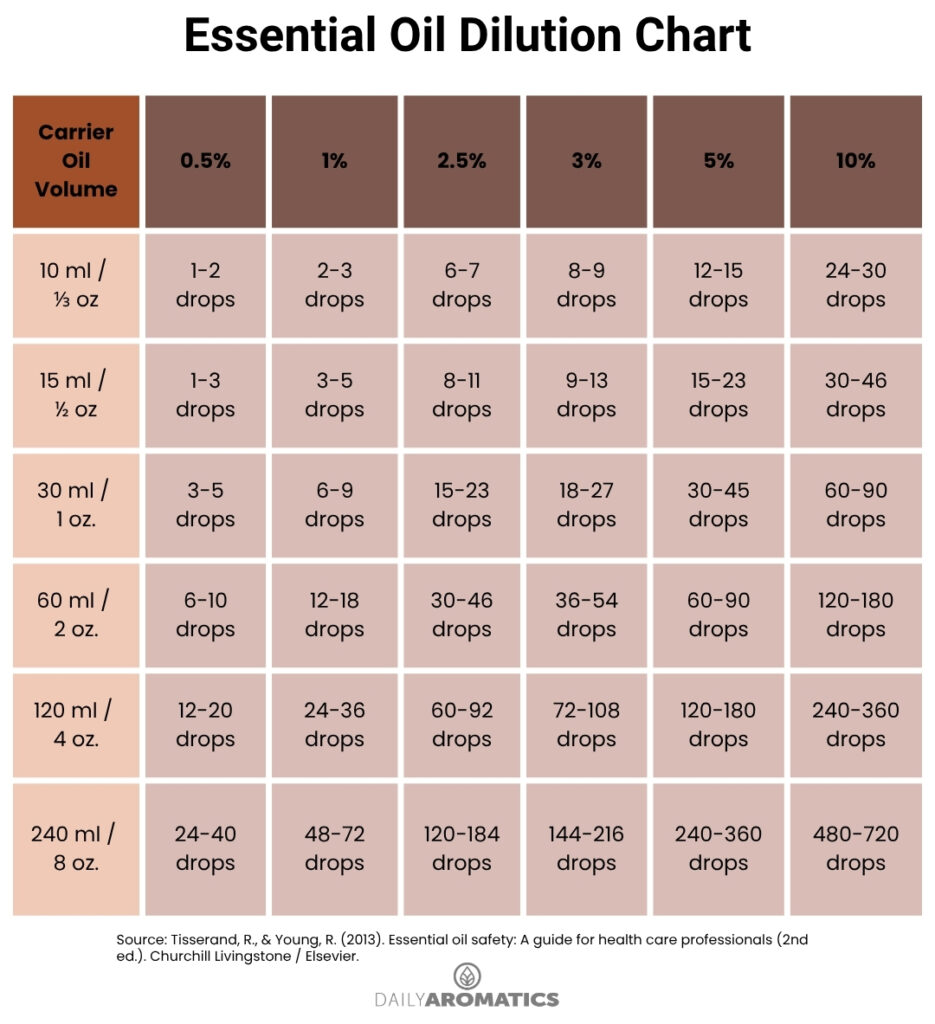
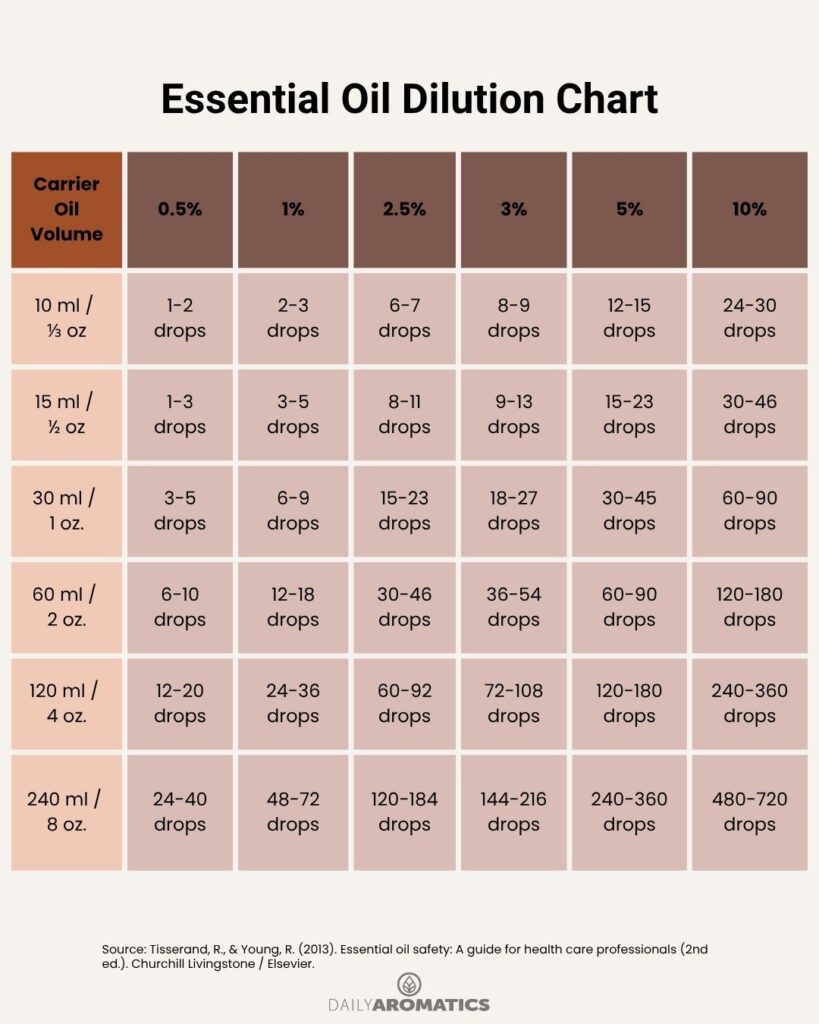
Essential Oil Dilution Chart

This chart is your quick reference for how many drops of essential oil to use based on your carrier oil amount and desired dilution percentage.

Dilution simply means mixing essential oils with a carrier oil (like coconut oil, olive oil, or jojoba) before applying them to the skin. This helps:

  • Reduce the risk of skin irritation
  • Improve absorption
  • Make your oils last longer
  • Allow for more consistent, even application

You’ll notice a range of dilution percentages—from very low (0.5–1%) to more concentrated (5–10%).

For most everyday uses, a 1–3% dilution is more than enough. Higher dilutions (5–10%) can be appropriate in certain situations, but are typically used short-term and with intention, rather than daily use.

This chart gives you the numbers—but your body gives you the feedback.


Suggested Applications for Dilution

Not all dilution levels are meant for the same purpose, and this chart helps take the guesswork out of when to use each range.

Lower dilutions (0.25–1%) are best for:

  • Babies, elderly individuals, or those with sensitive skin
  • Facial care
  • Daily, long-term use

Moderate dilutions (2–5%) are ideal for:

  • General wellness support
  • Massage oils
  • Occasional, targeted use

Higher dilutions (5–10% and above) are typically reserved for:

  • Short-term, targeted concerns
  • Specific areas of the body
  • Situations where more intensive support is needed

It’s important to remember that more is not always better with essential oils. Often, lower dilutions used consistently are both effective and gentler on the body.


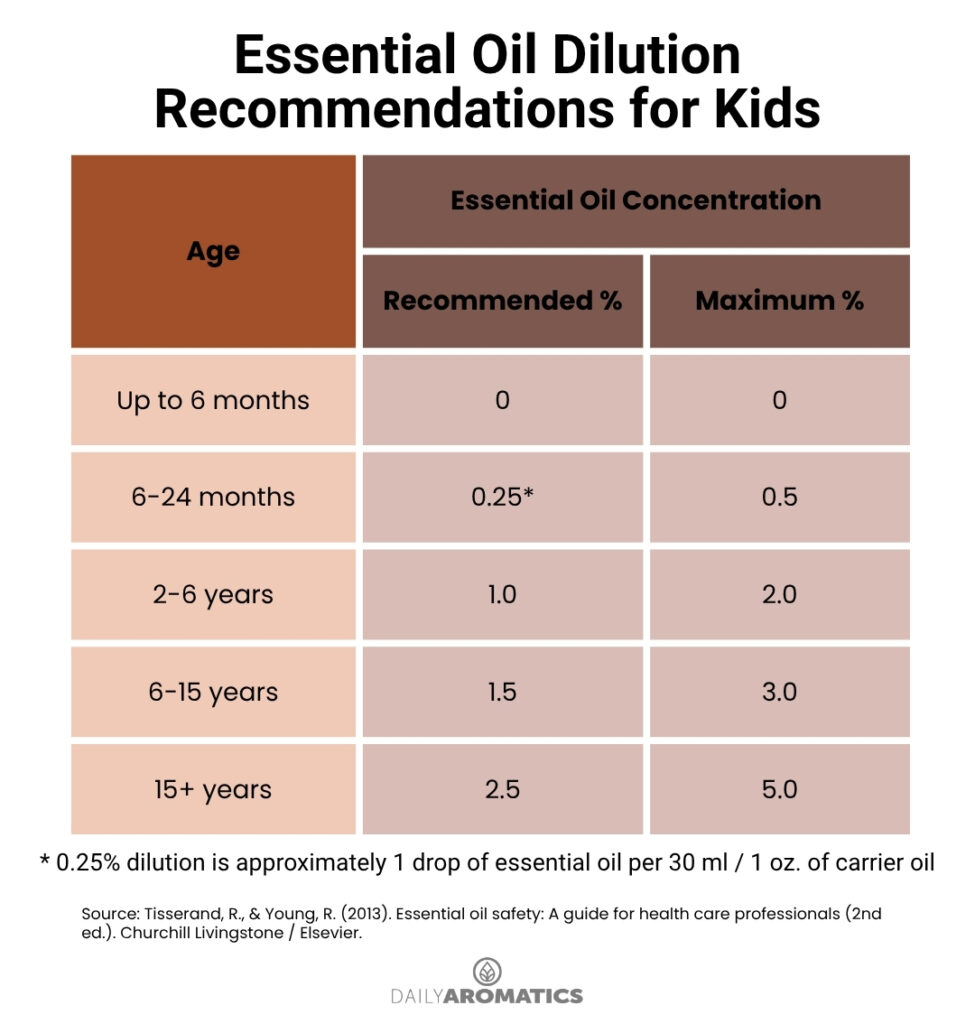
Dilution Recommendations for Kids

When it comes to children, dilution becomes even more important.

Children’s bodies are still developing, and they tend to be more sensitive to essential oils. Using lower dilutions helps you support them safely while still benefiting from the oils.

A few key things to keep in mind:

  • Always dilute more than you would for yourself
  • Start with the lowest recommended dilution
  • Use gentle, child-friendly oils
  • Avoid daily long-term use of the same oil without breaks

This chart gives age-based guidelines to help you feel more confident, but again—your child’s response matters most.


Important Note on Sensitization

One of the main reasons we dilute essential oils is to help prevent something called sensitization.

Sensitization happens when the body becomes reactive to an oil over time—often from using too much, too often, or applying it undiluted. It can show up as skin irritation or a reaction to an oil that previously felt completely fine.

The goal isn’t to create fear—but awareness.

By using proper dilution, rotating oils, and giving your body breaks when needed, you can continue to enjoy essential oils long-term without issue.


Closing

These charts are here to simplify things—but they’re not meant to replace your intuition.

Essential oils are a beautiful tool for supporting your home and health, and when used thoughtfully, they can be both effective and incredibly gentle.

If you’re ever unsure:

  • Start with a lower dilution
  • Test on a small area
  • Observe how your body responds

Over time, you’ll build confidence—and using essential oils will begin to feel second nature.

0 comments
0 FacebookTwitterPinterestEmail
Uncategorized

Essential Oil Safety

by woodsamy April 13, 2026

A Practical Guide for Confident, Everyday Use

What Makes Essential Oils So Potent?

Essential oils aren’t just fragrant—they’re chemically complex.

Each oil contains dozens (sometimes hundreds) of naturally occurring compounds like:

  • Monoterpenes (fresh, uplifting, fast-acting)
  • Alcohols (generally gentle and skin-friendly)
  • Phenols and aldehydes (more reactive and potentially irritating)

Because of this concentration and complexity, essential oils interact quickly with the body—through both the skin and the olfactory system.

That’s why safety isn’t about fear—it’s about respecting their potency.


Dilution: The Foundation of Safe Use

Dilution isn’t just about “stretching” your oils—it’s about how your body processes them.

When essential oils are applied neat (undiluted):

  • They absorb rapidly into the bloodstream
  • They can overwhelm the skin’s natural barrier
  • They increase the risk of sensitization (a delayed allergic-type reaction over time)

Carrier oils slow this process down. They:

  • Reduce the concentration of reactive compounds
  • Support more even absorption
  • Help protect the skin’s lipid barrier

This is especially important for oils high in more reactive constituents.


“Hot Oils” & Skin Sensitivity

Some essential oils feel warm—or even irritating—on the skin. This isn’t random.

It comes down to their chemistry.

Key compounds to understand:

  • Phenols (e.g., eugenol in clove, carvacrol in oregano)
  • Aldehydes (e.g., cinnamaldehyde in cinnamon, citral in lemongrass)

These compounds are:

  • Highly antimicrobial
  • Very active biologically
  • More likely to irritate skin and mucous membranes

That’s why oils like oregano, clove, cinnamon bark, and thyme (thymol) require much lower dilution.

Even oils like lemongrass (high in citral) can feel surprisingly strong despite smelling fresh and citrusy.

Practical takeaway:

It’s not the oil itself that’s “harsh”—it’s the chemical profile.

Used correctly, these oils can be incredibly beneficial. They just require:

  • Lower dilution (often 0.5–1%)
  • More mindful application
  • Occasional, not daily, use

Phototoxicity: Why Some Oils Don’t Mix with Sunlight

This is one of the most important (and misunderstood) safety topics.

Certain essential oils—especially cold-pressed citrus oils—contain compounds called:

Furanocoumarins

These compounds can:

  • Absorb UVA light
  • Become activated on the skin
  • Trigger a reaction that damages skin cells

This can lead to:

  • Redness or burns
  • Blistering
  • Long-lasting hyperpigmentation

Oils most commonly involved:

  • Bergamot
  • Lemon
  • Lime
  • Grapefruit

Key nuance:

  • This risk applies to topical use only
  • It is most significant with cold-pressed oils
  • Steam-distilled citrus oils typically have little to no phototoxic risk

Simple guideline:

Avoid direct sunlight or UV exposure on areas where these oils were applied for 12–24 hours.


Inhalation & Diffusing Safety

When you diffuse essential oils, you’re inhaling microscopic aromatic compounds that interact directly with the brain through the olfactory system.

This is what makes aromatherapy so effective—but also why moderation matters.

Overexposure can lead to:

  • Headaches
  • Nausea
  • Dizziness
  • Sensory overwhelm

This is especially true for:

  • Children
  • Sensitive individuals
  • Those new to essential oils

Why intermittent diffusing works:

Your body responds quickly to aromatic input. Continuous exposure doesn’t necessarily increase benefit—it can actually reduce sensitivity over time.

Babies & Children

Children are not just “small adults.” Their bodies process essential oils very differently, which is why extra care is needed.

Their skin is thinner and more permeable, their respiratory systems are still developing, and their detoxification pathways are not as mature. Because of this, certain essential oil compounds can feel much stronger—or even overwhelming—to a child’s system.

One of the most important things to understand here is the role of specific chemical constituents.

Compounds like 1,8-cineole (found in eucalyptus and some rosemary oils) and menthol (found in peppermint) can have a strong effect on the respiratory system. In young children, especially under the age of 6, these compounds may slow breathing or create a sensation that is too intense for their airways.

Because of this, many experts recommend avoiding these oils for young children—particularly around the face and chest—until at least age 6.

Instead, focus on gentler oils that are well tolerated.

Safer choices for young children (properly diluted):

  • Lavender
  • Roman chamomile
  • Frankincense
  • Sweet orange

Practical safety tips:

  • Keep dilution low (0.25–1%)
  • Avoid applying near the nose, mouth, or chest
  • Start with small amounts and observe closely
  • Use inhalation or diffusion before topical use when possible

Pregnancy

Pregnancy is a time to be both empowered and cautious.

Essential oils can cross into the bloodstream and, in some cases, may cross the placental barrier. While this doesn’t mean they are unsafe, it does mean that intentional, conservative use is important.

Some essential oils are best avoided during pregnancy due to their potential to stimulate uterine activity or because of their chemical composition.

Oils commonly recommended to avoid (especially in early pregnancy):

  • Clary sage
  • Cinnamon bark
  • Cassia
  • Oregano
  • Thyme (thymol chemotype)
  • Rosemary (high camphor types)

At the same time, many oils are considered gentle and supportive when used properly.

Generally considered safer options (in low dilution):

  • Lavender
  • Frankincense
  • Lemon (watch phototoxicity if topical)
  • Ginger (especially for nausea support)

The key here is simplicity.

Best practices during pregnancy:

  • Use low dilutions (around 1% or less)
  • Avoid daily, long-term use of strong oils
  • Stick to a small number of well-tolerated oils
  • Prioritize aromatic use (diffusing or inhalation)

Elderly

As we age, our bodies change in ways that affect how we respond to essential oils.

Skin becomes thinner and more permeable, meaning essential oils are absorbed more quickly. At the same time, liver and kidney function—which help process and eliminate compounds—may be less efficient than in younger years.

This doesn’t mean essential oils shouldn’t be used. In fact, they can be incredibly supportive. It simply means that a gentler approach is often best.

Helpful adjustments for older adults:

  • Use lower dilutions (around 1% or less)
  • Apply to smaller areas of the body
  • Avoid frequent reapplication throughout the day
  • Be mindful of medications or existing health conditions
  • Choose gentler oils over more stimulating or “hot” ones

A slower, simpler approach tends to be both safer and more effective.


Pets & Essential Oils

Animals process essential oils very differently than humans.

For example:

  • Cats lack certain liver enzymes needed to metabolize compounds found in essential oils
  • Dogs have a much stronger sense of smell and can be easily overwhelmed

This means oils that feel mild to us can be intense—or even harmful—for them.

Especially important:

  • Avoid applying oils directly to pets without proper knowledge
  • Be cautious with diffusing in enclosed spaces
  • Watch for behavioural changes (leaving the room, agitation, lethargy)

Sensitive Individuals

Some people are more reactive due to:

  • Chemical sensitivities
  • Allergies
  • Previous overexposure

Sensitization is especially important to understand here.

What is sensitization?

It’s not an immediate reaction—it develops over time when the immune system becomes reactive to a substance.

Once it happens, even small amounts can trigger irritation.

This is why:

  • Dilution matters
  • Rotating oils can be helpful
  • More is not better

Internal Use

Essential oils are highly concentrated chemical substances.

When taken internally:

  • They are absorbed rapidly
  • They interact directly with internal organs
  • Improper use can increase risk of irritation or toxicity

This route requires a much deeper understanding of:

  • Dosage
  • Oil chemistry
  • Individual health considerations

For most people, aromatic and topical use provide more than enough benefit.


Storage, Shelf Life & Oxidation

There’s a common belief—especially in some essential oil communities—that essential oils “never go bad.”

This isn’t true.

Essential oils are made up of natural chemical compounds, and over time, those compounds begin to change—especially when exposed to oxygen, heat, and light. This process is called oxidation.

Oxidation doesn’t just affect how an oil smells—it changes how it behaves on the skin.

Oxidized oils are significantly more likely to:

  • Cause skin irritation
  • Contribute to sensitization
  • Lose their therapeutic qualities

This is especially important for oils that are high in monoterpenes, which are more chemically reactive and prone to breaking down over time.
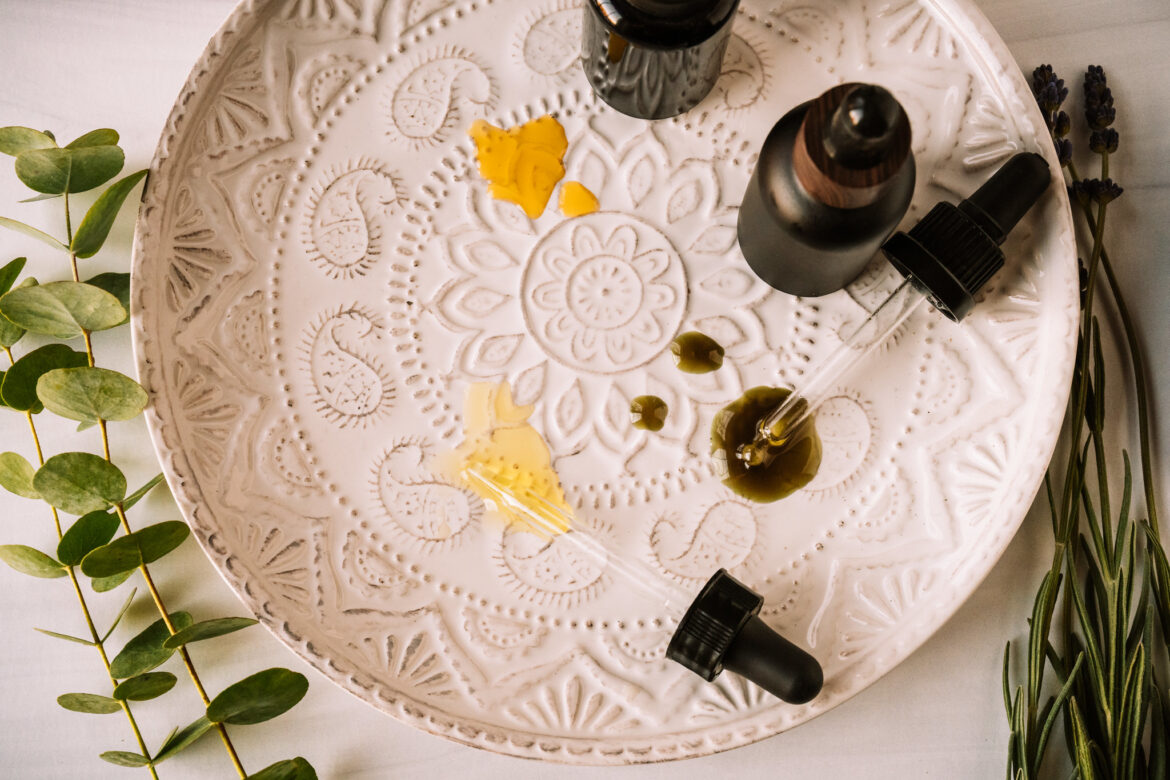
Even when stored properly, these oils have a shorter shelf life.
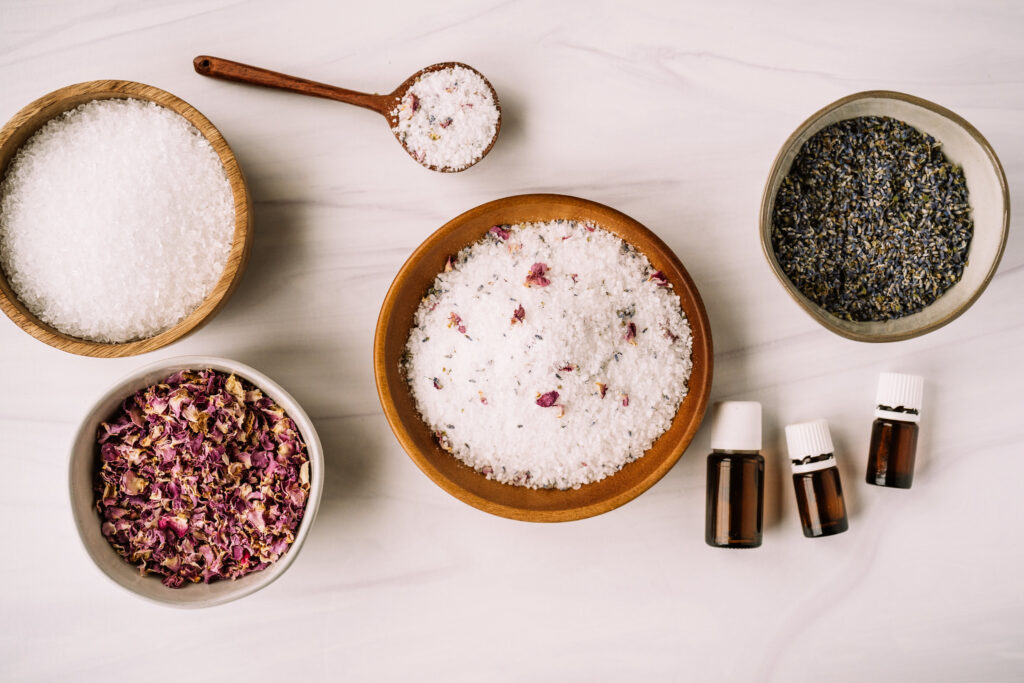
Common monoterpene-rich oils (shorter shelf life):

  • Lemon
  • Lime
  • Sweet orange
  • Grapefruit
  • Bergamot
  • Tangerine
  • Pine
  • Spruce
  • Fir
  • Tea tree

General shelf life guidelines:

  • Citrus oils: ~1–2 years
  • Conifer oils (pine, spruce, fir): ~2–3 years
  • Tea tree: ~2–3 years

Other oils (especially those rich in alcohols or sesquiterpenes) may last significantly longer—but no essential oil lasts forever.

Practical storage tips:

  • Keep bottles tightly closed (oxygen exposure speeds oxidation)
  • Store in a cool, dark place
  • Avoid heat and direct sunlight
  • Consider replacing frequently used citrus oils more often

A helpful mindset shift:
Fresh oils are not just more fragrant—they are safer for your skin.


Full Disclaimer

This content is for educational purposes only and is not intended as medical advice. I am not a licensed medical professional, and the information shared here is not meant to diagnose, treat, cure, or prevent any disease.

Essential oils are powerful natural substances and should be used with care and respect. Every individual is different, and what works well for one person may not be appropriate for another.

If you are pregnant or breastfeeding, have a medical condition, are taking medications, or are caring for young children, elderly individuals, or pets, please consult with a qualified healthcare provider before using essential oils.

By using essential oils, you accept full responsibility for your own health and well-being.

0 comments
0 FacebookTwitterPinterestEmail
  • 1
  • 2

Archives

  • May 2026
  • April 2026
  • March 2026

Categories

  • Uncategorized

About Me

About Me

Writer & Reader

Neque porro quisquam est, qui dolorem ipsum quia dolor sit amet, consectetur, adipisci velit, sed.

Keep in touch

Instagram Twitter Pinterest Tumblr Youtube Bloglovin Snapchat Facebook

Newsletter

Recent Posts

  • Natural Home: Creating a Cleaner, Calmer Home with Simple Plant-Based Alternatives

  • Seasonal Support: Working with Nature Throughout the Year

  • My Favourite Essential Oils for Beginners

  • New to Essential Oils? Start Here

  • Botanical Skin Care: A Simple Introduction to Caring for Your Skin with Plants

Categories

  • Uncategorized (11)

Recent Posts

  • Natural Home: Creating a Cleaner, Calmer Home with Simple Plant-Based Alternatives

    May 17, 2026
  • Seasonal Support: Working with Nature Throughout the Year

    May 17, 2026
  • My Favourite Essential Oils for Beginners

    May 17, 2026
  • New to Essential Oils? Start Here

    May 17, 2026
  • Botanical Skin Care: A Simple Introduction to Caring for Your Skin with Plants

    April 14, 2026

Instagram

Newsletter

  • Instagram

@2019 - All Right Reserved. Designed and Developed by PenciDesign


Back To Top
Welcome
  • Home
  • Blog
  • Shop
  • About

Shopping Cart

Close

No products in the cart.

Close