
When you’re getting started with essential oils, dilution can feel like one of the most confusing pieces.
But it doesn’t have to be complicated.
Think of dilution as a way to use essential oils effectively while being gentle on your body. Essential oils are highly concentrated plant extracts, and a little truly goes a long way.
These charts are here to give you a simple, practical reference point—not rigid rules. Every person (and every body) is different. The most important thing you can do is pay attention to how you respond and adjust accordingly.
A good rule of thumb?
Start low and go slow. You can always add more, but you can’t undo too much.
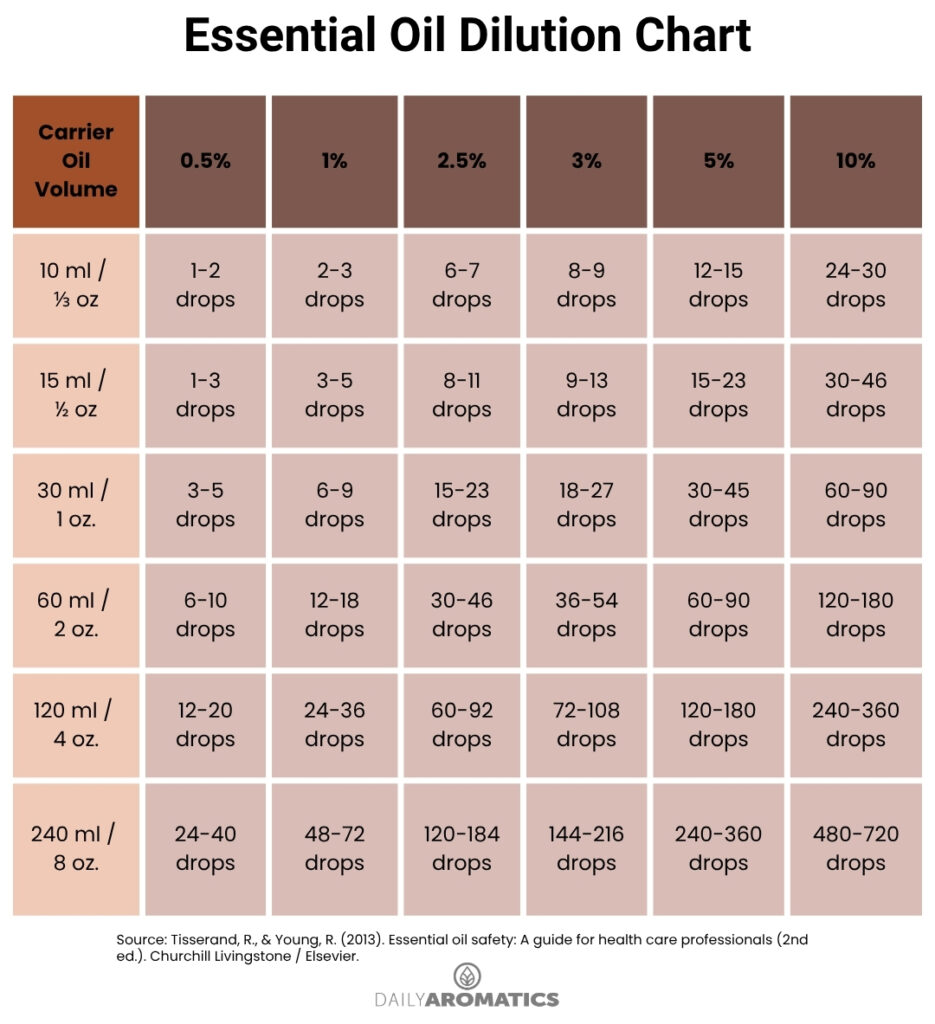
Essential Oil Dilution Chart
This chart is your quick reference for how many drops of essential oil to use based on your carrier oil amount and desired dilution percentage.
Dilution simply means mixing essential oils with a carrier oil (like coconut oil, olive oil, or jojoba) before applying them to the skin. This helps:
- Reduce the risk of skin irritation
- Improve absorption
- Make your oils last longer
- Allow for more consistent, even application
You’ll notice a range of dilution percentages—from very low (0.5–1%) to more concentrated (5–10%).
For most everyday uses, a 1–3% dilution is more than enough. Higher dilutions (5–10%) can be appropriate in certain situations, but are typically used short-term and with intention, rather than daily use.
This chart gives you the numbers—but your body gives you the feedback.
Suggested Applications for Dilution
Not all dilution levels are meant for the same purpose, and this chart helps take the guesswork out of when to use each range.
Lower dilutions (0.25–1%) are best for:
- Babies, elderly individuals, or those with sensitive skin
- Facial care
- Daily, long-term use
Moderate dilutions (2–5%) are ideal for:
- General wellness support
- Massage oils
- Occasional, targeted use
Higher dilutions (5–10% and above) are typically reserved for:
- Short-term, targeted concerns
- Specific areas of the body
- Situations where more intensive support is needed
It’s important to remember that more is not always better with essential oils. Often, lower dilutions used consistently are both effective and gentler on the body.

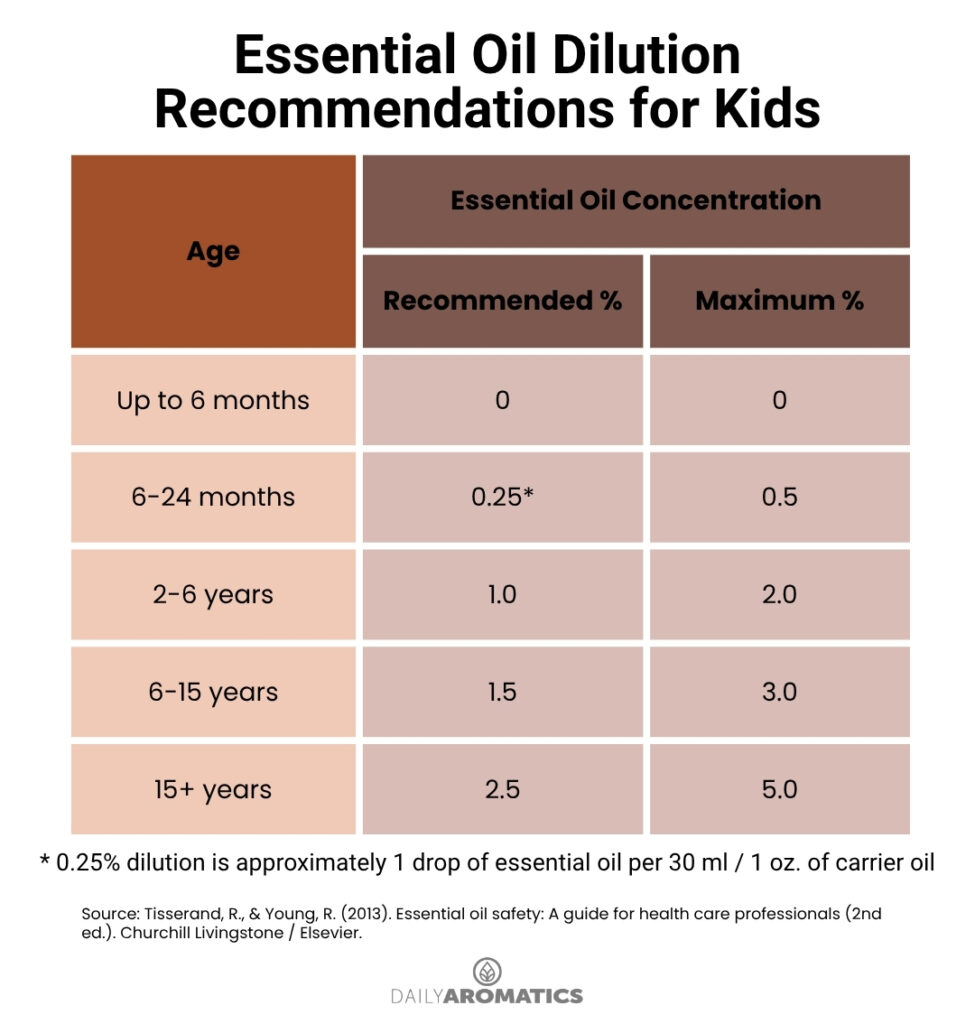
Dilution Recommendations for Kids
When it comes to children, dilution becomes even more important.
Children’s bodies are still developing, and they tend to be more sensitive to essential oils. Using lower dilutions helps you support them safely while still benefiting from the oils.
A few key things to keep in mind:
- Always dilute more than you would for yourself
- Start with the lowest recommended dilution
- Use gentle, child-friendly oils
- Avoid daily long-term use of the same oil without breaks
This chart gives age-based guidelines to help you feel more confident, but again—your child’s response matters most.
Important Note on Sensitization
One of the main reasons we dilute essential oils is to help prevent something called sensitization.
Sensitization happens when the body becomes reactive to an oil over time—often from using too much, too often, or applying it undiluted. It can show up as skin irritation or a reaction to an oil that previously felt completely fine.
The goal isn’t to create fear—but awareness.
By using proper dilution, rotating oils, and giving your body breaks when needed, you can continue to enjoy essential oils long-term without issue.
Closing
These charts are here to simplify things—but they’re not meant to replace your intuition.
Essential oils are a beautiful tool for supporting your home and health, and when used thoughtfully, they can be both effective and incredibly gentle.
If you’re ever unsure:
- Start with a lower dilution
- Test on a small area
- Observe how your body responds
Over time, you’ll build confidence—and using essential oils will begin to feel second nature.
