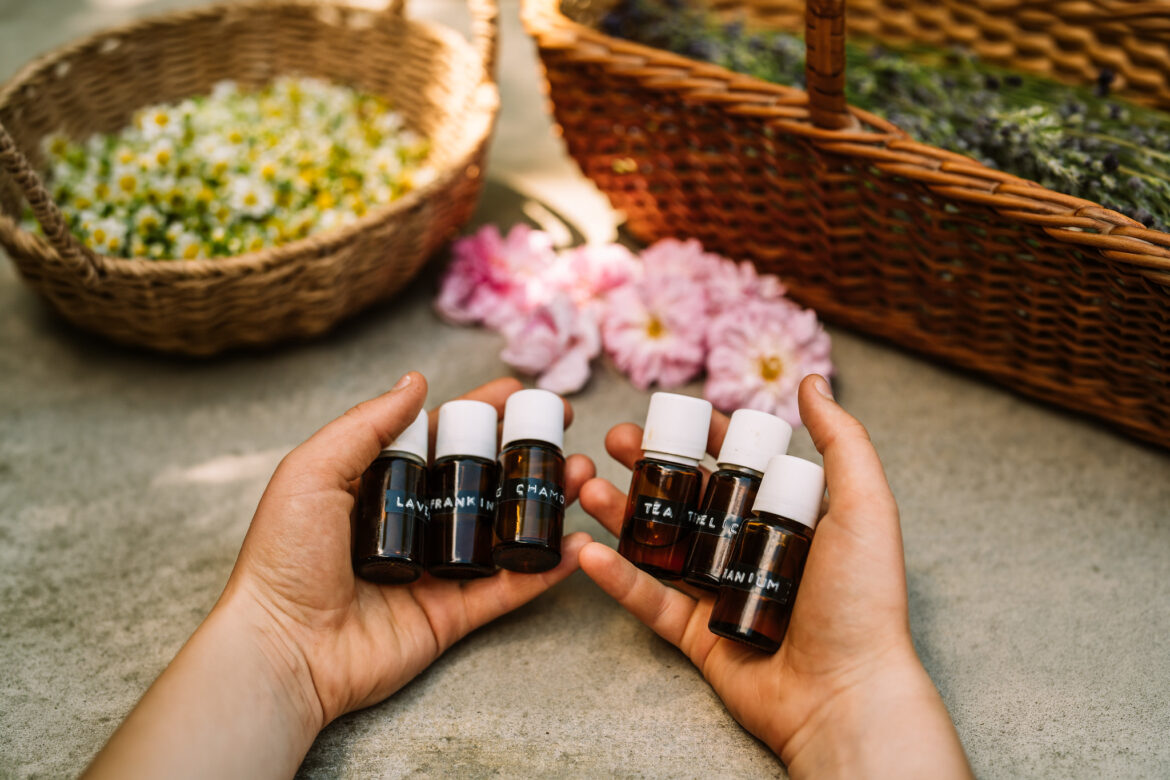
When people first begin exploring natural skin care, they often assume they need a large collection of essential oils. The truth is, a handful of versatile oils can go a long way.
After years of using essential oils in my own home and studying aromatherapy, these are the oils I reach for most often when creating facial oils, salves, body products, and other skin care preparations.
1. Lavender Essential Oil
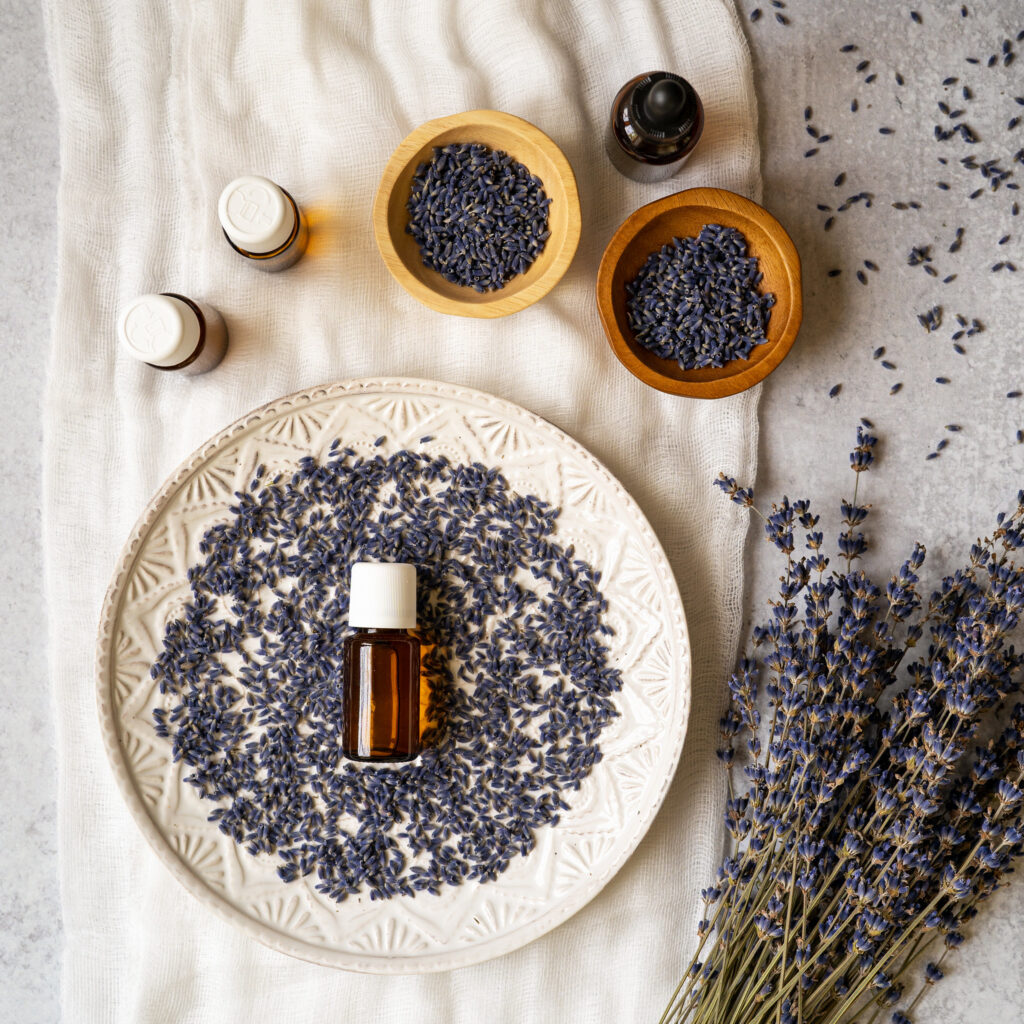
If I could only keep one essential oil for skin care, lavender would be high on the list.
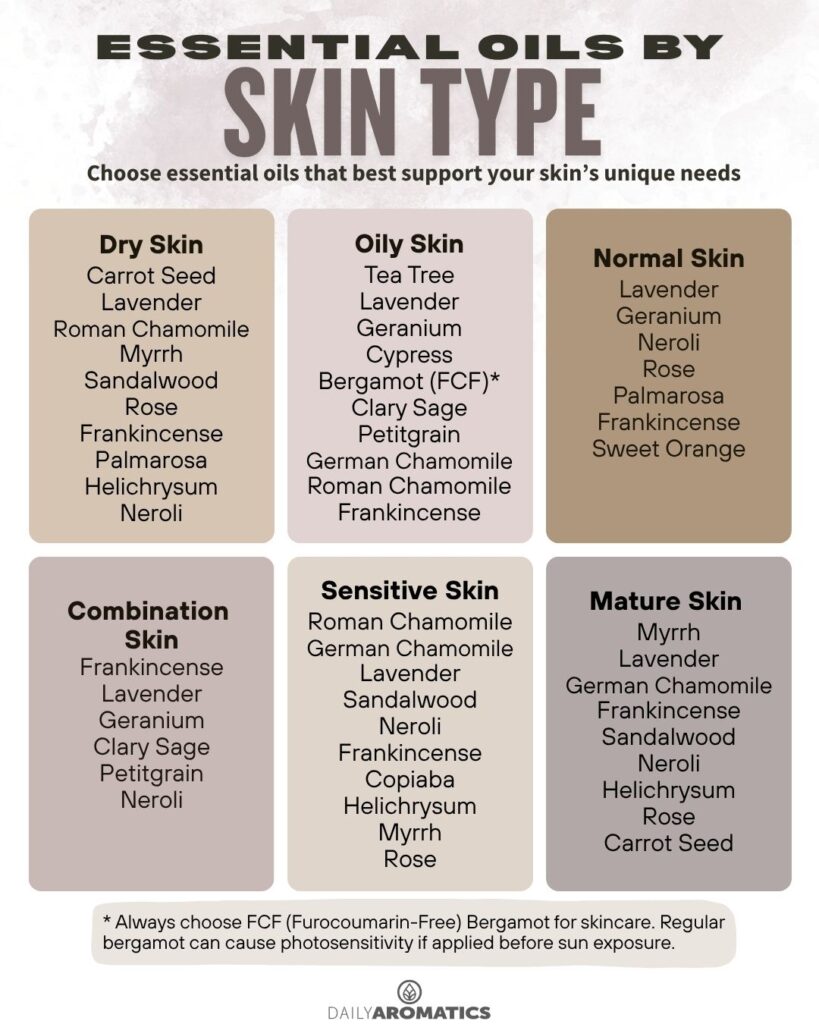
Lavender is one of the most versatile essential oils available and works well in products for nearly every skin type. It is gentle, widely tolerated, and blends beautifully with other oils.
I often include lavender in:
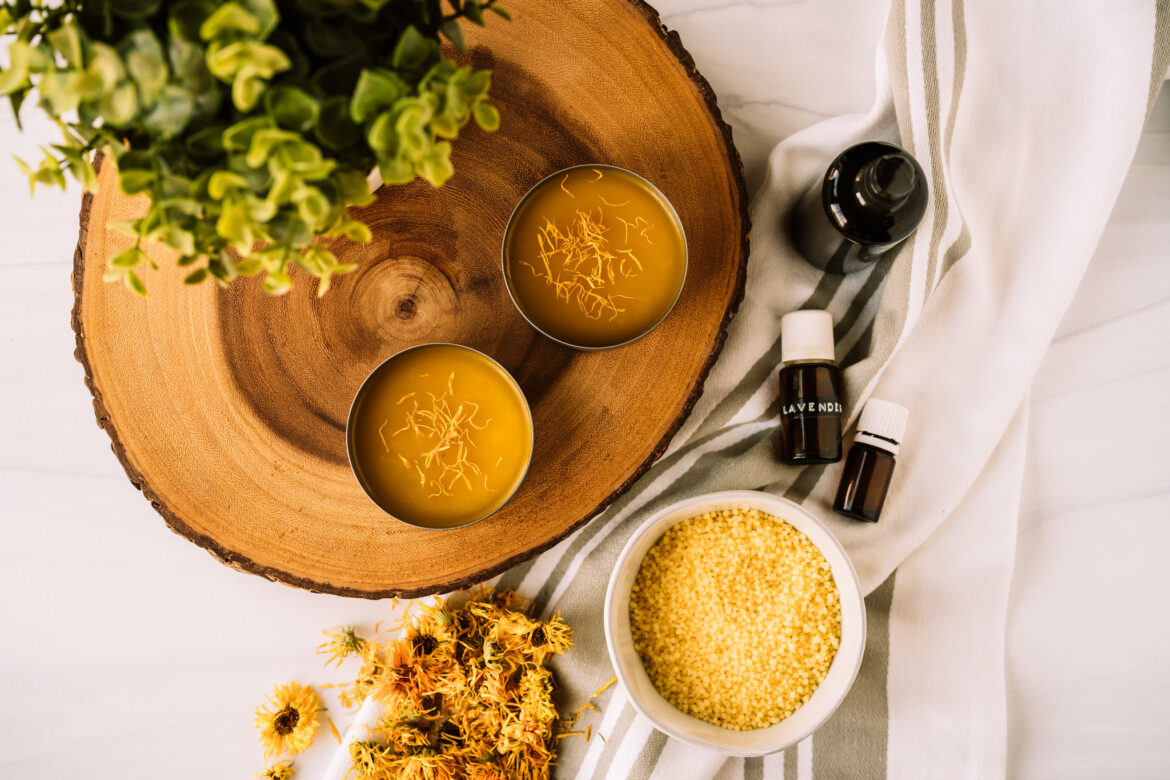
- Calendula salves
- Face serums
- Body oils
- After-sun products
- Hand creams
- Lip balms
Because it is so versatile, lavender is often the first essential oil I recommend for beginners interested in making their own skin care products.
2. Frankincense Essential Oil
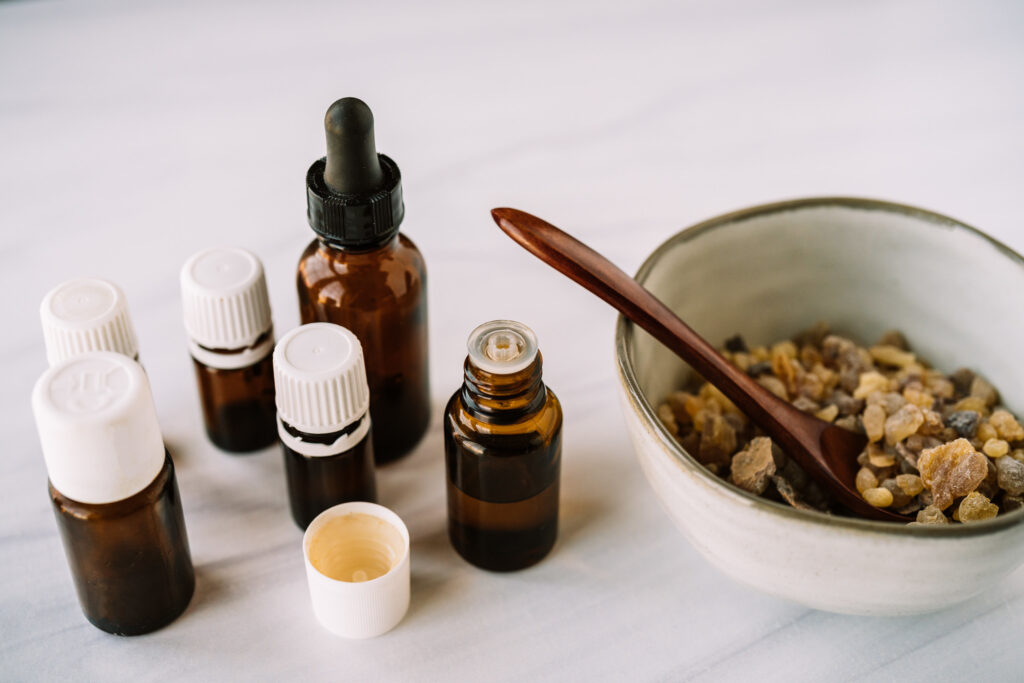
If lavender is the most versatile skin care oil in my collection, frankincense is probably my favourite oil for mature skin.
Frankincense has earned a permanent place in my skin care cupboard because of the wide variety of ways it can be used. While it is often associated with anti-aging products, its usefulness extends well beyond wrinkles and mature skin.
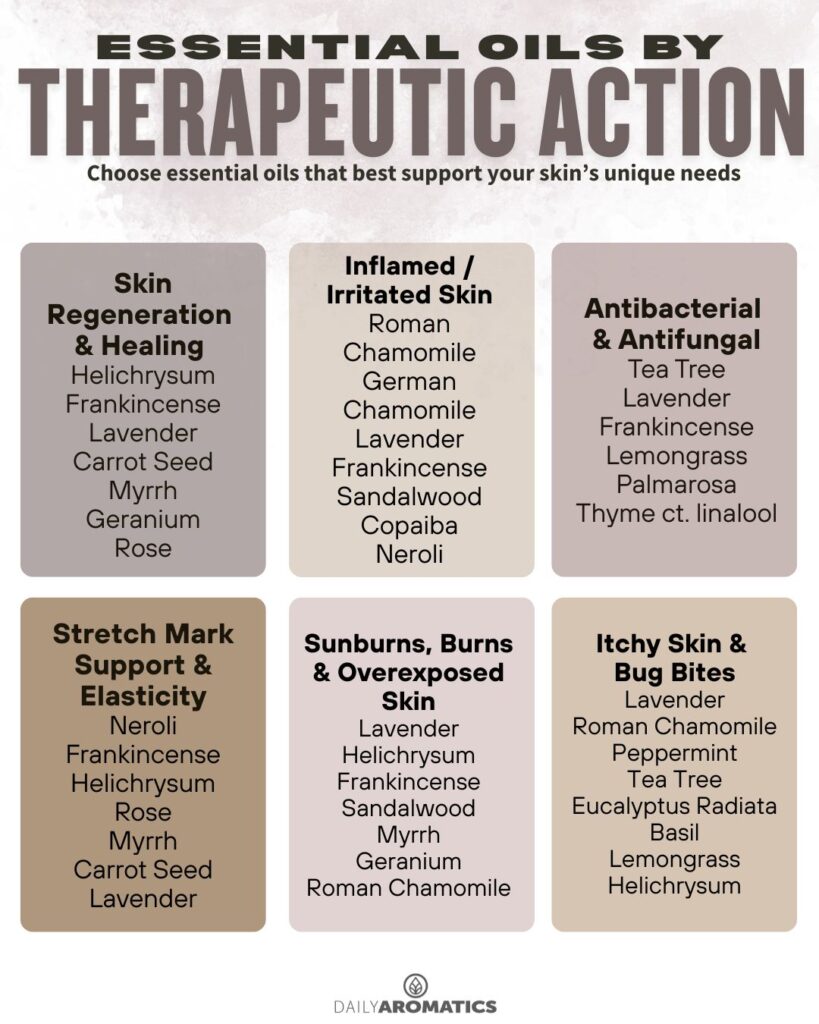
I frequently reach for frankincense when creating blends intended to support:
- Mature skin
- Fine lines and wrinkles
- Scar tissue
- Dry or irritated skin
- Acne-prone skin
- Inflamed skin conditions
- Blackheads
- Skin recovery and postoperative care once the skin has fully closed
Because of its versatility, you’ll find frankincense in many of my facial serums and skin care blends. It pairs beautifully with oils like lavender, helichrysum, geranium, and German chamomile.
What I appreciate most about frankincense is that it feels equally at home in a daily facial serum as it does in a more targeted skin-support blend. If I were building a skin care collection from scratch, frankincense would be one of the first oils I’d purchase.
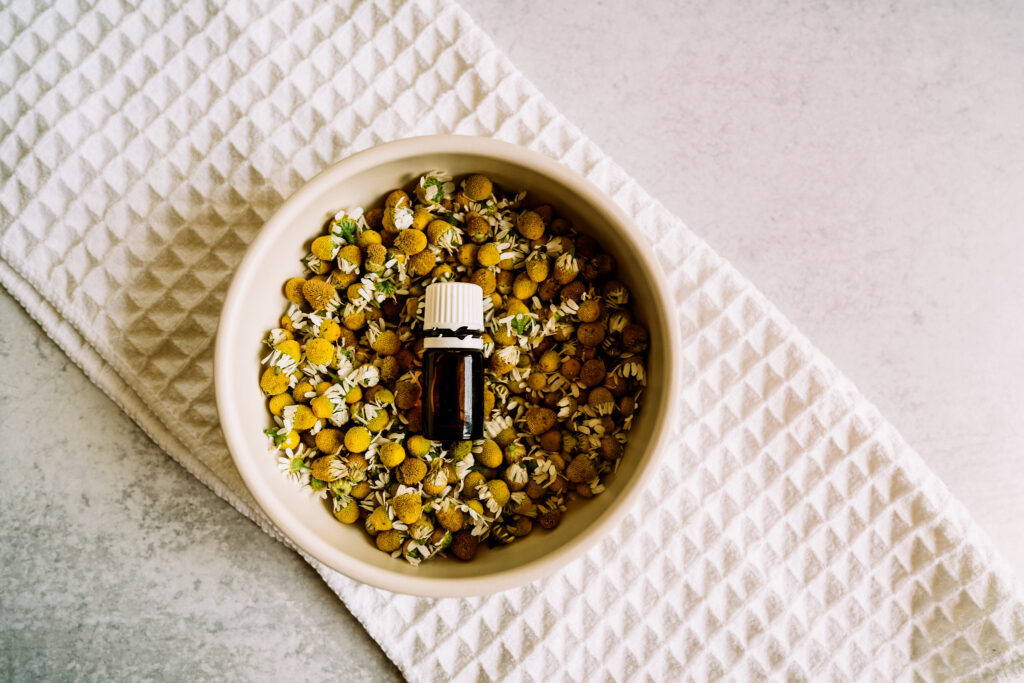
3. German Chamomile Essential Oil
German chamomile is one of my favourite oils for supporting irritated or unhappy skin.
Its deep blue colour comes from naturally occurring compounds formed during distillation. While it can be more expensive than some other oils, a little goes a long way.
I often reach for German chamomile when creating products designed to support:
- Sensitive skin
- Dry skin
- Red-looking skin
- Skin that needs extra comfort and care
Because of its strong colour, I typically use only a drop or two in a formulation.
4. Helichrysum Essential Oil
Helichrysum is one of my favourite essential oils for supporting the skin’s natural healing process.
While it is often one of the more expensive oils in an aromatherapist’s collection, it has earned a permanent place in mine because of its versatility and effectiveness. The good news is that a little goes a long way, so a bottle can last surprisingly long.
I often reach for helichrysum when creating blends designed to support:
- Bruises
- Bumps and scrapes
- Dry or damaged skin
- Stretch marks
- Skin that needs extra care and support
- Various skin concerns such as dermatitis, eczema, and psoriasis
Because it is such a potent oil, I typically use only a few drops at a time. For me, helichrysum is one of those oils that justifies its higher price tag through the many ways it can be used.
5. Geranium Essential Oil
Geranium is often referred to as a balancing oil for the skin.
Its floral aroma makes it a popular addition to facial products, creams, and body care formulations. It pairs particularly well with lavender, frankincense, and citrus oils.
I often use geranium in:
- Facial oils
- Moisturizers
- Body oils
- Skin balancing blends
Even though I don’t particularly enjoy diffusing geranium, I appreciate what it brings to skin care recipes.
6. Tea Tree Essential Oil
Tea tree is the oil I reach for most often when blemishes make an appearance.
It has earned a reputation as one of the most popular essential oils for problem-prone skin and is frequently included in spot treatments, cleansers, and facial products.
I use tea tree in:
- Facial cleansers
- Spot treatments
- Clarifying products
- Foot care products
Because of its strong aroma, I usually blend it with other oils rather than using it on its own.
Final Thoughts
One of the biggest lessons I’ve learned over the years is that natural skin care doesn’t have to be complicated.
While there are many wonderful essential oils available, these six are the ones I consistently reach for when creating skin care products for myself and my family.
If you’re just getting started, don’t feel like you need dozens of oils. A small collection of versatile favourites can take you surprisingly far.